
Treatment Levels Explained
An educational overview of common mental health and recovery treatment levels and how they differ.
Mental health and recovery care exists along a continuum, with different levels of treatment designed to meet different clinical needs. Choosing the appropriate level of care depends on symptom severity, safety considerations, functional impact, and the ability to participate consistently in treatment.
This page provides a neutral, educational overview of commonly used treatment levels. It is intended to support understanding—not to diagnose, prescribe, or recommend a specific course of care. Final treatment decisions should always be made in consultation with licensed professionals.
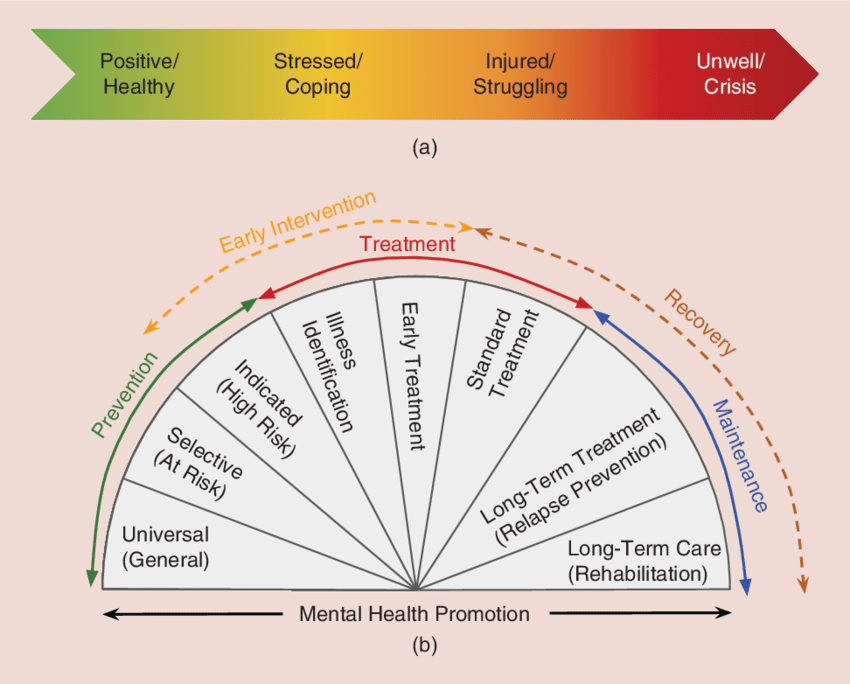
Understanding the Continuum of Care
Treatment levels are designed to provide the least intensive care necessary to safely and effectively support an individual’s needs. As symptoms increase in severity or complexity, higher levels of care may be recommended to provide additional structure, monitoring, or clinical support.
Movement along the continuum is not linear or permanent. Some individuals may step up to higher levels during periods of increased need and step down as stability improves. Others may benefit from longer engagement at a particular level.
Understanding how treatment levels differ can help individuals and couples ask informed questions and avoid both under-treatment and unnecessary escalation.
Outpatient Therapy
Typical Structure
Common Focus
Considerations: Outpatient therapy may be appropriate when individuals are able to function in daily life and do not require frequent clinical monitoring.
Intensive Outpatient Programs (IOP)
Typical Structure
Common Focus
Considerations: IOPs offer structured support while allowing individuals to live at home and maintain daily responsibilities.
Partial Hospitalization Programs (PHP)
Typical Structure
Common Focus
Considerations: PHPs provide intensive support without overnight stays and are often used when IOP is insufficient.
Inpatient and Residential Treatment
Typical Structure
Common Focus
Considerations: These levels are reserved for situations where outpatient care cannot safely meet clinical needs.
Dual Diagnosis Across Levels of Care
Dual diagnosis treatment may occur at multiple levels, depending on severity and safety considerations. Integrated care is used when mental health conditions and substance-related concerns occur together.
How Appropriate Treatment Levels Are Determined
Treatment level recommendations are typically based on:
Assessments help determine which level of care may be most appropriate at a given time.
Important Safety Considerations
If there is immediate risk of harm, severe withdrawal symptoms, or an acute psychiatric emergency, emergency services or crisis resources should be contacted immediately. Educational resources are not a substitute for urgent care.
