
Couples Therapy for Trauma: Understanding Healing, Relationships, and Recovery Together
Trauma rarely stays in one person. A car accident, a combat deployment, a childhood spent walking on eggshells, or years of living with a partner’s addiction can all leave marks that show up later in ordinary moments: a startle at a raised voice, a shutdown in the middle of an argument, flinching during affection, or a fight that escalates long before either of you knows why.
If you’re reading this, you may be trying to work out whether those patterns come from trauma, whether couples therapy can help, and whether you should be in a room together at all. Those are the right questions. The honest answer is that couples therapy for trauma can be very helpful for many couples, but it usually works best as one part of a plan, not the whole plan. Most trauma-focused treatments with the strongest research behind them are delivered individually. Relationship-focused work then helps both partners understand what is happening between them, communicate more safely, and rebuild trust.
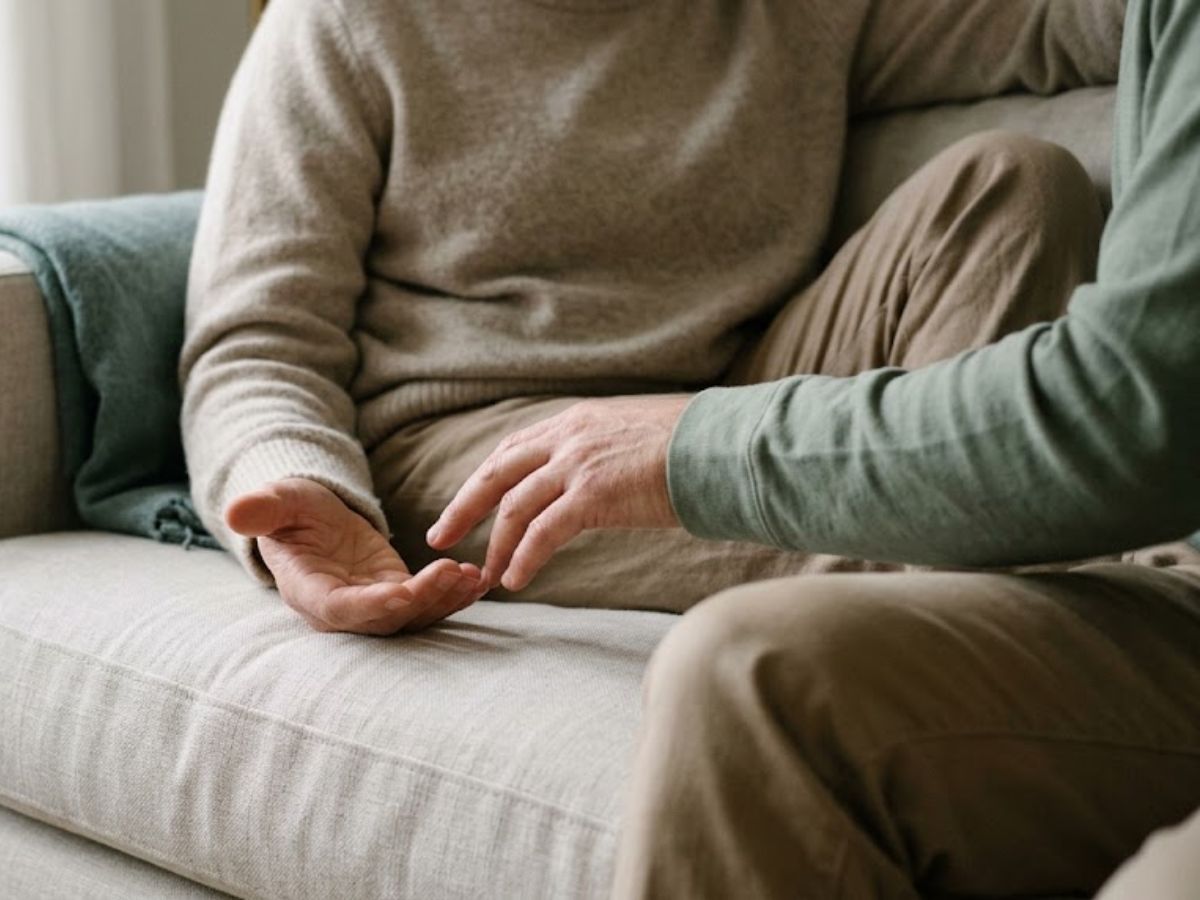
This guide explains how trauma affects relationships, what trauma-informed couples therapy actually involves, which approaches are designed for which problems, when individual treatment should come first, and when joint sessions aren’t appropriate at all. It is written for couples in any kind of relationship, married or not, and for situations where one partner, or both, carries a trauma history.
Key takeaways
- Trauma and PTSD are not the same thing. Many people live through traumatic events without developing PTSD, but trauma can still shape how they connect, argue, and trust.
- Trauma-informed couples therapy focuses on safety, pacing, and choice. It does not require either partner to share trauma details in front of the other.
- Individual trauma treatments such as Cognitive Processing Therapy, Prolonged Exposure, and EMDR are typically delivered one-on-one. Couples work usually runs alongside or after them.
- Joint sessions are not appropriate when there is active violence, coercive control, or fear of speaking openly. In those situations, individual support and safety planning come first.
- Trauma and substance use often overlap. When they do, integrated care that addresses both is generally recommended.
How Trauma Can Affect a Romantic Relationship
Trauma changes how the nervous system reads danger. After a frightening or overwhelming experience, the brain can stay tuned for threat long after the threat is gone. Inside a relationship, that alertness often gets aimed at the person closest to you, not because they are dangerous, but because closeness is where people feel most exposed.
None of what follows is a character flaw or a deliberate attempt to hurt a partner. These are protective responses that made sense at some point and are now causing friction. It is also true that not every relationship problem comes from trauma. Ordinary stress, mismatched expectations, depression, anxiety, and substance use can produce similar patterns, which is why an individual assessment matters.
Emotional Withdrawal and Difficulty Connecting
Some trauma survivors cope by going numb. They may seem present but far away, struggle to name feelings, or pull back when a conversation turns emotional. Their partner often reads this as rejection. The U.S. Department of Veterans Affairs’ National Center for PTSD describes partners feeling that their loved one is “physically present but emotionally absent” when avoidance and numbing take hold.
Trust Issues and Fear of Vulnerability
When trauma involved betrayal, especially by a caregiver or former partner, trusting someone new can feel risky even when that person has done nothing wrong. This can show up as checking, testing, difficulty accepting reassurance, or keeping parts of life private as a form of protection.
Communication Problems and Conflict Escalation
A tone, a look, or a slammed cupboard can act as a trauma reminder. When that happens, the body may react before the thinking brain catches up, so arguments jump from zero to a full fight-or-flight response. Couples frequently describe fights that feel bigger than the topic, or one partner going silent while the other pursues harder.
Emotional Dysregulation and Trauma Responses
Emotional dysregulation means feelings arrive fast, hit hard, and take a long time to settle. It can look like irritability, crying spells, sudden anger, or shutting down completely. Neither partner is choosing these reactions in the moment, but both partners can learn skills to slow them down.
Intimacy and Physical Affection Difficulties
Trauma, and especially sexual trauma, can change how touch feels. Some survivors avoid sex or affection, some dissociate during intimacy, and some feel pressure to go along with closeness they don’t want. Sleep problems and certain medications can add to the strain. These are common, treatable concerns, and they deserve to be raised with a clinician without shame.
Hypervigilance, Avoidance, and Emotional Triggers
Hypervigilance is a state of constant scanning for danger. In a home, it can mean sitting facing the door, reacting strongly to noise, avoiding crowds, or needing tight control over plans. A partner may gradually reshape their own life to avoid setting off reactions: skipping events, handling all the errands, keeping the peace at any cost.
How One Partner’s Trauma Can Affect Both People
That last pattern has a name: accommodation. The VA notes that accommodation is usually well-intentioned but can keep avoidance going and is linked with lower relationship satisfaction. The partner without a trauma history may also develop their own stress symptoms, exhaustion, or resentment. That’s one reason good care looks at both people, not just the one with the diagnosis.
What Is Trauma-Informed Couples Therapy?
Trauma-informed couples therapy is relationship counseling delivered by a clinician who understands how trauma affects behavior and who adjusts the pace, structure, and goals of therapy so neither partner is re-traumatized. It is a way of working, not a single named technique.
The framework most U.S. behavioral health organizations use comes from SAMHSA’s Concept of Trauma and Guidance for a Trauma-Informed Approach, which sets out six principles: safety; trustworthiness and transparency; peer support; collaboration and mutuality; empowerment, voice, and choice; and attention to cultural, historical, and gender issues. Applied to couples work, those principles usually mean:
- Emotional and physical safety comes first. The therapist screens each partner privately for violence and fear before starting joint work.
- Trauma responses are named, not blamed. Shutdowns and outbursts are treated as information about the nervous system rather than proof that someone doesn’t care.
- Boundaries and consent are respected. Each partner decides what they share, when, and with whom.
- Pacing is deliberate. Stabilization and coping skills come before anything emotionally intense.
- Regulation and communication skills are taught directly, so both partners can slow conflict down.
- Individual and shared goals are both tracked. Your relationship goals sit alongside each person’s own recovery goals.
How does that differ from traditional marriage or relationship counseling? Standard couples therapy often starts with present-day conflict and assumes both partners can tolerate emotionally charged conversations. A trauma-informed approach first asks whether they can, and what has to be in place before they do.
Trauma-informed care does not mean disclosing your trauma to your partner. Detailed processing of traumatic memories usually happens in individual sessions. Some survivors later choose to share parts of their story with a partner, with a therapist’s support. That is a choice, not a requirement.
Types of Trauma That Can Affect Couples
Trauma is defined by its effect, not just the event. SAMHSA describes it in terms of the event, how the person experienced it, and its lasting effects. Two people can live through the same thing and come out with very different needs. The categories below overlap, and reading about them is not a substitute for an assessment.
Childhood Trauma and Adverse Childhood Experiences
Adverse childhood experiences (ACEs) are potentially traumatic events between birth and age 17, such as abuse, neglect, witnessing violence, or growing up with a caregiver’s substance use or mental illness. The CDC notes that toxic stress from ACEs can make it harder to form healthy, stable relationships in adulthood. Adults with childhood trauma often bring patterns into partnerships, such as fear of abandonment, difficulty relying on anyone, or a pull toward familiar chaos, that make far more sense once their origins are understood.
Complex Trauma and Repeated Traumatic Experiences
Complex trauma refers to prolonged or repeated trauma, often interpersonal and often beginning early, where escape felt impossible. The World Health Organization’s ICD-11 recognizes complex PTSD (CPTSD), which adds lasting problems with emotional regulation, self-worth, and relationships to core PTSD symptoms. The U.S. DSM-5-TR doesn’t list CPTSD as a separate diagnosis, so you may hear clinicians describe it differently. Either way, relationship difficulties are central to the picture, which makes careful pacing especially important.
PTSD and Post-Traumatic Stress
Post-traumatic stress disorder is a specific diagnosis, not a synonym for “having been through trauma.” The National Institute of Mental Health explains that many people have symptoms after a dangerous event but most recover over time; PTSD is diagnosed when symptoms persist and interfere with daily life, including relationships. NIDA estimates that about 8% of trauma survivors develop PTSD. Our separate guide to PTSD treatment for couples covers PTSD symptom clusters and medications in more depth.
Trauma Following Accidents, Medical Emergencies, or Serious Illness
Car crashes, sudden cardiac events, ICU stays, difficult births, pregnancy loss, and serious diagnoses can all be traumatic for the patient and for the partner who witnessed them. Couples sometimes find that the person who “held it together” in the crisis is the one who struggles months later.
Military and First Responder-Related Trauma
Combat, repeated deployments, and repeated exposure to death and injury in police, fire, EMS, and dispatch work carry specific risks. Shift work, a culture of toughness, and the habit of not bringing work home can add distance at home. The VA has built several couple- and family-involved programs for this population, and couples with these backgrounds may want a clinician who knows the culture.
Grief, Bereavement, and Sudden Loss
Not all grief is traumatic, but sudden, violent, or preventable deaths, including overdose and suicide loss, can produce trauma reactions alongside grief. Partners often grieve differently and on different timelines, which can feel like disconnection.
Sexual Trauma and Abuse
Sexual trauma frequently affects intimacy, body image, and trust long after the event. Clinicians who work with sexual trauma pay particular attention to consent within the relationship, to pacing, and to never pressuring disclosure.
Domestic Violence and Relationship-Related Trauma
Trauma can come from a past abusive relationship, or from the current one. These are very different situations. Trauma from a former partner can be addressed in trauma-informed couples work. Active abuse in the current relationship is not a couples-therapy problem, as the safety section below explains.
Addiction-Related and Relational Trauma
Living with a partner’s active addiction (broken promises, financial chaos, overdoses, lies, frightening behavior) can itself be traumatic. So can betrayals such as infidelity. These experiences sometimes produce what clinicians call relational or attachment injuries, and they are among the most common reasons couples seek help through Couples Rehab.
Can Couples Therapy Help With PTSD?
PTSD affects relationships through its core symptoms: intrusive memories and nightmares, avoidance, emotional numbing, irritability and anger, sleep disturbance, hyperarousal, social withdrawal, and difficulty with intimacy. The VA points out that the link works both ways. PTSD strains the relationship, and the quality of the relationship can influence the course of PTSD. Positive support appears to buffer symptoms, while negative reactions can make them worse.
Relationship-focused interventions can help partners understand what PTSD is, stop taking symptoms personally, reduce accommodation, improve communication, and build supportive routines around sleep, triggers, and treatment. Some couple-based treatments, such as Cognitive-Behavioral Conjoint Therapy for PTSD, were designed specifically to target PTSD symptoms and relationship functioning together.
Here is the important limit: couples therapy is not a replacement for individual PTSD treatment. According to the VA, individual trauma-focused therapy remains the front-line option, while couple-based approaches show early but promising evidence, particularly for relationship outcomes. Conjoint treatment may be considered when a clinician judges it safe and appropriate. We cover those specific protocols, how long they take, and how they compare with individual therapy in our dedicated guide to couples therapy for PTSD, so this page focuses on the broader picture.
Evidence-Based Therapies Used in Trauma Treatment for Couples
These approaches are not interchangeable. Some treat trauma symptoms in an individual. Others repair the relationship. Some address trauma and substance use together. No couple needs all of them, and no single provider offers all of them. Independently licensed clinicians recommend approaches based on assessment.
Individual trauma-focused approaches
Eye Movement Desensitization and Reprocessing (EMDR)
EMDR asks a person to briefly hold a traumatic memory in mind while following a structured set of bilateral stimuli, such as eye movements or taps, with the goal of reducing the memory’s emotional charge. The American Psychological Association’s PTSD clinical practice guideline lists EMDR as a conditionally recommended treatment, and the VA counts it among the best-supported PTSD therapies. Because it involves direct work with traumatic memories, EMDR is typically delivered in individual sessions rather than with a partner present.
Cognitive Processing Therapy (CPT)
CPT helps people examine and change “stuck points,” beliefs formed after trauma such as “It was my fault,” “I can’t trust anyone,” or “The world is completely unsafe.” It pays particular attention to themes of safety, trust, power, esteem, and intimacy, which is why its effects often reach into the relationship. The APA guideline recommends CPT as a first-line PTSD treatment. It is usually short-term and structured.
Prolonged Exposure Therapy (PE)
PE helps people gradually and safely approach memories, situations, and places they have been avoiding because of trauma. Over time, the fear response weakens and avoidance shrinks. For couples, reduced avoidance can mean being able to go out together again, attend family events, or reclaim parts of shared life that trauma had taken over. The APA guideline recommends PE as a first-line treatment.
Cognitive Behavioral Therapy (CBT)
CBT is a broad family of approaches that work on the links between thoughts, feelings, and behavior. Trauma-focused CBT protocols are recommended for PTSD. General CBT skills such as identifying distorted thinking, problem-solving, and behavioral activation are also widely used for co-occurring depression, anxiety, and relationship conflict. Trauma-Focused CBT (TF-CBT) is a distinct model developed mainly for children and adolescents. It is relevant for families with traumatized kids, but it isn’t an adult couples treatment.
Relationship-focused approaches
Emotionally Focused Therapy (EFT)
EFT is grounded in attachment theory, the idea that adults, like children, need to feel that a loved one is emotionally accessible and responsive. It helps couples see the negative cycle they get stuck in, often one partner pursuing and the other withdrawing, as the shared enemy, and then build new moments of safe connection. EFT has a solid research base for general relationship distress and has been adapted for couples where one or both partners are trauma survivors. It works on emotional connection and attachment injuries. It is not a standalone PTSD treatment.
Gottman Method-Informed Couples Therapy
Gottman-informed work focuses on conflict management, friendship, and repair. One concept is especially useful for trauma: emotional flooding, the physiological overwhelm during conflict when heart rate climbs and productive conversation becomes impossible. Couples learn to recognize flooding, take structured breaks, and come back to the conversation. These skills can lower conflict escalation, but Gottman-informed interventions are not a PTSD treatment and should complement, not replace, individual trauma care when it is needed. Integrative Behavioral Couple Therapy (IBCT), another research-supported model built around acceptance and change, is sometimes used in a similar role.
Behavioral Couples Therapy (BCT)
BCT is designed for couples where one partner has an alcohol or drug use disorder. It pairs relationship-strengthening work with a structured recovery agreement that both partners support. A 2008 meta-analysis in Clinical Psychology Review found BCT outperformed comparison treatments on relationship satisfaction and, at follow-up, on frequency of substance use. One caveat is easy to miss: most BCT research involved couples where only one partner had a substance use disorder. When both partners are using, clinicians typically adapt the approach or sequence care differently. Learn more about couples behavioral therapy as a level of support.
Integrated and skills-based approaches
Seeking Safety and Integrated Trauma-Informed Care
Seeking Safety is a present-focused, skills-based model for people dealing with both trauma-related symptoms and substance use. It doesn’t require retelling trauma memories. It teaches coping skills, safety planning, and healthier relationships through a set of topics that can be covered in flexible order, and it has been used with people who have a trauma history but don’t meet full PTSD criteria. It is commonly delivered in individual or group format, often as an early stabilizing step.
Dialectical Behavior Therapy (DBT) Skills
DBT was developed for people with intense, hard-to-manage emotions. Its skills modules (mindfulness, distress tolerance, emotion regulation, and interpersonal effectiveness) are widely used to build stability before or alongside trauma processing. Some couples therapists teach DBT-style skills jointly so both partners share a language for de-escalation.
Motivational Interviewing (MI)
MI is a collaborative conversation style that helps people resolve ambivalence about change. It is often used early in care, particularly when substance use is involved or one partner is unsure about treatment.
Should Trauma Be Treated Individually or Through Couples Therapy?
For most couples, the answer is both, in a deliberate order. That’s the core reason this question deserves its own section: getting the sequence wrong is one of the most common ways trauma-related couples therapy goes badly.
A clinician will usually think through the following:
- Individual psychological assessment. What is each person’s diagnosis, if any? Is this PTSD, complex trauma, depression, anxiety, substance use, or a mix?
- Personal trauma history. What happened, and how much of it does each partner know? None of that has to be shared jointly.
- Stabilization. Can each partner manage strong emotions, sleep reasonably, and stay safe? If not, stabilization comes first.
- Relationship communication. How do conflicts unfold, and where do they get stuck?
- Shared goals. What do both partners want, whether that’s staying together, separating well, or simply fighting less while they figure it out?
- Emotional and physical safety. Is anyone afraid? (See the safety section below.)
- Readiness for conjoint sessions. Can both people stay regulated enough in a joint session for it to help rather than harm?
- Ongoing reassessment. Plans change as symptoms shift.
In practice, many plans look something like this: individual trauma-focused therapy for the partner (or partners) with trauma symptoms, a limited number of joint sessions early on for education and safety skills, and more intensive relationship work as individual symptoms ease. Some couples do both tracks at the same time with coordinated clinicians.
Two principles protect both partners. Trauma processing does not need to happen in front of a partner, and often shouldn’t. And each person’s privacy and autonomy are maintained. A partner isn’t entitled to the details of the other’s therapy. If you want to read more about balancing these tracks, our article on shared recovery vs. individual healing explores the same question in an addiction context.
When Both Partners Have Experienced Trauma
It’s common for two people with trauma histories to find each other. Shared understanding can be a real strength. It can also mean two nervous systems that set each other off.
Typical patterns include:
- Different histories, different responses. One partner may fight, the other freeze; one may need to talk it out, the other may need space.
- Mutual triggers. Partner A’s raised voice triggers Partner B’s withdrawal, which triggers Partner A’s fear of abandonment, and around it goes.
- Rapid escalation. With no one regulated enough to slow things down, conflicts can escalate quickly.
- Attachment insecurity on both sides, which makes reassurance hard to give and hard to receive.
- Difficulty supporting each other, because each person’s own distress takes up the room.
What helps is usually a combination of individual assessment for each partner (two histories mean two treatment plans), shared de-escalation skills, and clear agreements about boundaries during conflict. A crucial shift is learning to support one another without taking responsibility for the other person’s healing. You can be a steady presence for your partner. You cannot be their trauma therapist, and trying to be one tends to exhaust both of you.
Trauma, Addiction, and Dual Diagnosis Treatment for Couples
This is where trauma, mental health, and relationships meet most often, and where the stakes for getting care right are highest.
The overlap is substantial. The VA’s National Center for PTSD reports that more than four in ten U.S. adults with PTSD also have a drug or alcohol use problem, and that PTSD usually develops before the substance problem. NIDA explains that trauma and chronic stress can change brain systems involved in stress, reward, and learning; that some people use substances to cope with distress; and that stress can increase cravings and relapse risk.
That pattern is often called self-medication: alcohol to get to sleep, cannabis to quiet hypervigilance, opioids or benzodiazepines to numb memories, stimulants to push through exhaustion. It works briefly, then deepens the problem. Depression and anxiety often travel alongside both, and our guides on couples therapy for depression and couples therapy for anxiety disorders cover those intersections.
It is equally important to say what the research does not say: most people who experience trauma do not develop a substance use disorder, and having both does not mean recovery is out of reach.
What does good care look like?
- Integrated or concurrent treatment. Both NIDA and the VA recommend addressing co-occurring PTSD and substance use at the same time rather than waiting for one to resolve first. That can mean an integrated model or two coordinated therapies.
- Individualized recovery plans. Each partner’s substance use, mental health, and trauma history are assessed separately.
- Relapse-trigger planning that includes trauma reminders, not just people, places, and things.
- Psychiatric care when needed, including evaluation for medications for substance use disorders or co-occurring conditions.
- Relationship-focused recovery support, such as BCT-style recovery agreements, when both partners are safe and willing.
Some independently operated providers coordinate all of these, including detox where medically needed, residential or outpatient addiction treatment, individual trauma therapy, psychiatric services, and couples counseling. Others specialize in one piece. Explore dual diagnosis programs to understand what integrated mental health and addiction care involves, review couples addiction treatment options across levels of care, or read about the role of trauma in substance abuse. For couples already in addiction treatment, our guide to trauma therapy for couples in recovery goes deeper into how trauma work fits inside a recovery program.
How Trauma-Informed Couples Therapy Works
The steps below describe a typical clinical pathway. The actual order, length, and setting are determined by the independent provider’s clinicians, and many plans move back and forth between steps.
Step 1 – Individual Assessment and Initial Screening
Each partner is assessed separately: mental health history, trauma exposure, substance use, medical needs, and current functioning. Standardized screening tools are often used.
Step 2 – Relationship Safety Evaluation
Each partner is asked privately about violence, threats, coercion, and fear. This is a standard part of responsible couples care, not an accusation. The answers determine whether joint sessions are appropriate.
Step 3 – Individualized Treatment Planning
The clinician recommends which approaches fit each partner and the relationship, at what level of care, and in what order.
Step 4 – Stabilization and Coping Skills
Before deeper work, each partner builds skills to manage triggers, sleep, cravings, and strong emotions. Skills-based models such as Seeking Safety or DBT skills are common at this stage.
Step 5 – Individual Trauma-Focused Treatment
When indicated, the partner or partners with trauma symptoms begin individual therapy such as CPT, PE, or EMDR.
Step 6 – Appropriate Couples Therapy Sessions
Joint sessions focus on psychoeducation, de-escalation, reducing accommodation, and communication. They are timed and paced so they support individual treatment rather than compete with it.
Step 7 – Relationship Repair and Communication Development
As symptoms ease, couples work can go deeper into trust, attachment injuries, intimacy, and, if relevant, betrayal or addiction-related harm. Our guide to rebuilding trust in recovery as a couple covers this phase from a recovery perspective.
Step 8 – Continuing Care and Long-Term Support
Ongoing outpatient therapy, peer support, check-ins, and relapse prevention help gains last. For couples leaving residential addiction treatment, structured options like sober living for couples can provide continuing recovery support. When travel or scheduling is a barrier, online couples counseling delivered by licensed clinicians may be an option for appropriate cases.
When Couples Therapy May Not Be Appropriate
If you are in immediate danger, call 911. For a suicide or mental health crisis, call or text 988 or chat at 988lifeline.org. For confidential domestic violence support, call the National Domestic Violence Hotline at 1-800-799-SAFE (7233), text START to 88788, or chat at thehotline.org.
Joint therapy is not appropriate for every relationship, and a trauma-informed clinician will not start it if it could increase danger. Individual treatment, confidential safety planning, or specialist support usually needs to come first when there is:
- Active intimate partner violence: physical, sexual, or threatened violence.
- Coercive control: monitoring, isolating, controlling money, or punishing independence.
- Threats or intimidation, including toward children, pets, or property.
- Stalking or surveillance.
- Sexual violence or pressure within the relationship.
- Fear of speaking openly in front of a partner, or fear of consequences after a session.
- Severe psychiatric instability, such as active psychosis or mania.
- Active suicidal risk, which needs crisis-level care first.
- Ongoing substance-related instability, such as intoxication at sessions or withdrawal that needs medical management.
- Any situation where joint sessions could make things more dangerous.
Couples therapy is not a tool for mediating active abuse. Abuse is the responsibility of the person using it, not a shared relationship problem, and joint sessions can expose the person being harmed to retaliation. Anyone experiencing abuse deserves confidential, individual support. Advocates at the National Domestic Violence Hotline can help with safety planning whether or not you choose to stay. Our crisis support resources list additional options.
How Long Does Couples Therapy for Trauma Take?
There’s no universal timeline, and any program that promises recovery in a fixed number of sessions deserves skepticism. Duration depends on:
- the type and severity of the trauma, and whether PTSD or complex trauma is present;
- whether one or both partners need individual treatment;
- co-occurring depression, anxiety, or other mental health conditions;
- substance use, and whether detox or residential care is needed first;
- current stability and relationship safety;
- the specific approaches used and how often sessions happen;
- each person’s progress, which is rarely linear.
To give a sense of scale: many structured trauma-focused protocols are designed as short-term courses. CPT is commonly delivered in about 12 sessions, and the VA describes Cognitive-Behavioral Conjoint Therapy for PTSD as a 15-session program. Relationship repair, stabilization for complex trauma, and addiction recovery often take longer and may continue in lower-intensity forms for months. Your clinicians should review progress with you regularly and adjust the plan.
How to Find Trauma-Informed Couples Therapists and Treatment Programs
When you start looking for couples therapists who specialize in trauma, or for trauma therapy programs for couples that also address addiction, a few markers separate qualified care from good marketing.
What to look for
- Appropriate licensure, such as a psychologist, licensed clinical social worker, licensed marriage and family therapist, licensed professional counselor, or psychiatric prescriber, in good standing in your state. Our guide to therapy credentials explains the differences.
- Trauma-specific training and experience, including formal training in at least one evidence-based trauma therapy.
- PTSD treatment qualifications if PTSD is suspected or diagnosed.
- Experience with couples, not only individuals.
- Individual assessment procedures for each partner.
- Private domestic violence and safety screening before joint work.
- Access to individual trauma therapy, either in-house or through coordinated referral.
- Psychiatric care when medication evaluation is needed.
- Integrated addiction treatment if substance use is part of the picture.
- Clear information on insurance and payment. Coverage for couples sessions varies widely. See whether couples therapy is covered by insurance for the basics.
- Continuity of care: a plan for what happens after the program or course of therapy ends.
Questions to ask a provider before you begin
- How do you screen each partner for safety, and is any of that done privately?
- What trauma-specific therapies are your clinicians trained in, and which would you consider for us?
- Will trauma processing happen in individual sessions, joint sessions, or both, and how do you decide?
- How do you coordinate individual therapy and couples therapy if different clinicians are involved?
- How do you handle situations where both partners have trauma histories or substance use?
- What happens if one of us is not ready for joint sessions?
- How do you measure progress, and how often will we review the plan?
- What does this cost, what is the role of insurance, and who confirms coverage?
- What support is available after treatment ends?
A careful provider will welcome these questions. Vague answers, guaranteed outcomes, or pressure to commit immediately are red flags.
Exploring Trauma Therapy and Couples Treatment Options Through Couples Rehab Center
Couples Rehab Center (CouplesRehab.com) is an independent educational and care-navigation resource, not a treatment facility. We do not provide therapy, diagnose conditions, prescribe medication, or deliver trauma treatment. Clinical care is provided by independently licensed and independently operated providers, who make all decisions about diagnosis, treatment planning, and admission.
What a care navigator can do is help you:
- Describe your concerns and needs, at whatever level of detail feels comfortable.
- Understand possible behavioral health options, such as outpatient therapy, intensive outpatient, residential, or dual diagnosis care.
- Explore independently operated providers that may fit, including those that work with couples and trauma.
- Prepare questions about trauma specialization, safety screening, and couples services.
- Understand how insurance and admissions generally work, with benefits and eligibility confirmed by the provider and your plan.
- Confirm clinical suitability directly with the licensed provider, who makes the final determination.
Not every provider offers every service or modality, availability varies, and placement, coverage, and outcomes can’t be guaranteed. Some providers in our network may have referral or advertising relationships with us; see our advertising disclosure and provider verification process for details. To learn more about the process from start to finish, see how couples rehab works, or start with the confidential couples assessment.
Frequently Asked Questions About Couples Therapy for Trauma
What is couples therapy for trauma?
It is relationship-focused therapy that accounts for how one or both partners’ trauma histories affect communication, trust, conflict, and intimacy. A trauma-informed couples therapist prioritizes safety, pacing, and choice, and coordinates with individual treatment when trauma symptoms need direct care.
Can couples therapy help heal trauma?
Couples therapy can ease trauma’s effects on a relationship and create a more supportive environment for recovery. For trauma symptoms themselves, especially PTSD, individual trauma-focused therapies have the strongest evidence. Most couples benefit from a combination rather than couples therapy alone.
Can unresolved trauma destroy a relationship?
Unresolved trauma can put serious strain on a relationship, but it doesn’t doom one. Many couples improve once trauma responses are understood and treated. The outcome depends on safety, both partners’ willingness, and access to appropriate care, and staying together is not the right outcome for every couple.
Can couples therapy help when one partner has PTSD?
Yes, often as a complement to individual PTSD treatment. Couples work can reduce accommodation, improve communication, and help the non-PTSD partner understand symptoms. Some couple-based PTSD protocols exist, but the VA considers individual trauma-focused therapy the front-line treatment.
Should both partners attend trauma therapy?
Both partners usually benefit from being involved in some way, but not necessarily in the same sessions. The partner with trauma symptoms may need individual therapy, and the other partner may benefit from their own support, especially if they’ve developed stress symptoms or burnout.
Is EMDR used in couples therapy?
EMDR is primarily an individual trauma therapy. Some clinicians coordinate individual EMDR with couples work such as EFT, and a few integrate the two, but processing sessions are typically done one-on-one. Joint EMDR is not a standard approach.
Can couples therapy help with childhood trauma?
It can help couples understand how childhood experiences shape adult attachment patterns, reactions, and conflicts, and attachment-based approaches like EFT are designed for that. Deep processing of childhood trauma usually happens in individual therapy.
What happens when both partners have unresolved trauma?
Each partner needs an individual assessment and possibly their own treatment. Couples work focuses on recognizing mutual triggers, de-escalating together, and setting boundaries, while each person takes responsibility for their own healing rather than their partner’s.
Can trauma cause intimacy and trust issues?
Yes. Trauma, particularly interpersonal or sexual trauma, commonly affects trust, emotional closeness, and physical intimacy. These issues are treatable and are a regular focus in both individual trauma therapy and couples work.
Should trauma be treated individually before couples counseling?
Often, but not always. When symptoms are severe, safety is uncertain, or a partner can’t stay regulated in joint sessions, individual stabilization and treatment usually come first. When both partners are stable and safe, the two can run in parallel.
Can addiction and relationship trauma be treated together?
Yes. Integrated treatment that addresses substance use and trauma at the same time is generally recommended. Couples can explore dual diagnosis programs that coordinate addiction treatment, individual trauma therapy, and relationship-focused work when clinically appropriate.
When should couples avoid joint trauma therapy?
When there is active violence, coercive control, threats, stalking, sexual coercion, fear of speaking openly, active suicidal risk, severe psychiatric instability, or ongoing intoxication. In those situations, individual care and confidential safety planning come first.
How long does trauma-informed couples therapy take?
There’s no set length. Structured protocols may run roughly 12 to 15 sessions, while relationship repair, complex trauma, and addiction recovery often take longer. Your clinician should review progress regularly and avoid promising a fixed timeline.
How do couples find a qualified trauma-informed therapist?
Look for licensed clinicians with formal trauma training, couples experience, private safety screening, and access to individual trauma therapy and addiction care if needed. Ask direct questions about methods, coordination, and costs. A care navigator can help you explore independently licensed options.
Does insurance cover trauma therapy for couples?
Coverage varies by plan and service. Health plans generally cover medically necessary treatment for a diagnosed individual, such as individual PTSD therapy, more consistently than couples sessions, which may be covered only when tied to one partner’s diagnosis. Benefits must be confirmed with your insurer and the provider.
Sources and further reading
- U.S. Department of Veterans Affairs, National Center for PTSD. PTSD and Family / Partner Relationships (for providers)
- U.S. Department of Veterans Affairs, National Center for PTSD. PTSD and Substance Misuse
- National Institute of Mental Health. Post-Traumatic Stress Disorder
- American Psychological Association. PTSD Clinical Practice Guideline — Treatments
- National Institute on Drug Abuse. Trauma and Stress
- SAMHSA. Concept of Trauma and Guidance for a Trauma-Informed Approach
- Centers for Disease Control and Prevention. About Adverse Childhood Experiences
- Powers MB, Vedel E, Emmelkamp PM. Behavioral couples therapy for alcohol and drug use disorders: a meta-analysis. Clinical Psychology Review, 2008.
- National Domestic Violence Hotline: thehotline.org · 988 Suicide & Crisis Lifeline: 988lifeline.org
This page is for educational purposes and is not a substitute for professional diagnosis or treatment. Couples Rehab is not a healthcare provider. If you are in crisis, call or text 988, or call 911 in an emergency. Review our editorial standards, medical review policy, and disclaimer.
