Federal Appeals Court Decision on Abortion Pill Access Raises Concerns for Women’s Health and Mental Well-Being
A recent federal court ruling has reignited national debate surrounding reproductive healthcare access in the United States—particularly the availability of medication abortion and miscarriage treatment options. The legal developments could have far-reaching implications not only for physical health services, but also for the emotional and mental well-being of women and couples navigating complex medical decisions.
What Happened: A Major Shift in Access to Medication
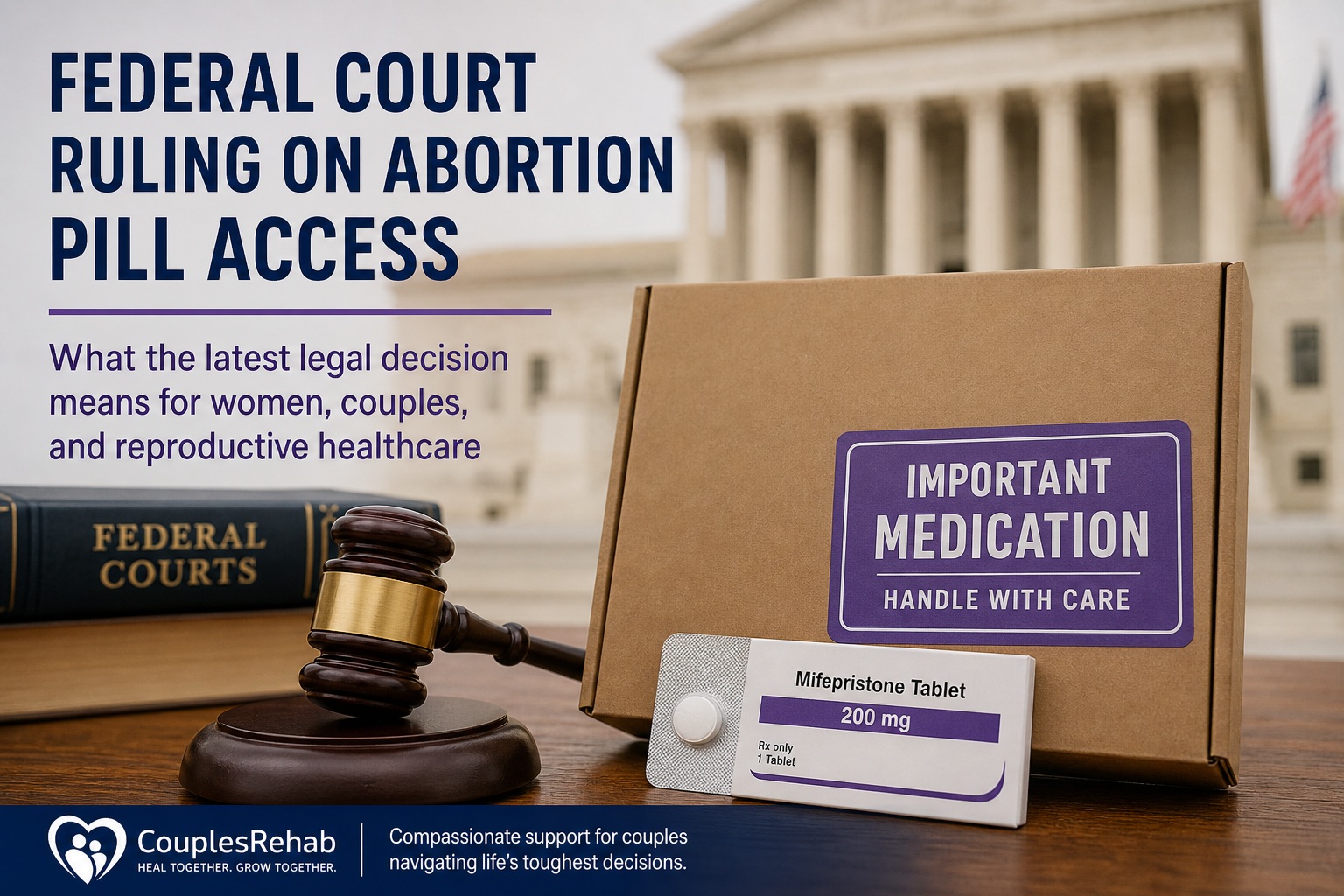
In early May 2026, a panel of judges from the Fifth U.S. Circuit Court of Appeals issued a decision that restricts how one of the most commonly used abortion medications—mifepristone—can be distributed. The ruling effectively blocks patients from receiving the medication through the mail, requiring instead that it be dispensed in person at a healthcare facility.
This decision temporarily overturns more recent federal policies that had expanded access through telehealth services. Under those policies, patients could consult with licensed providers remotely and receive the medication by mail—an approach that became increasingly common, especially after the COVID-19 pandemic.
Medication abortion, which typically involves mifepristone followed by misoprostol, accounts for a significant portion of pregnancy terminations in the U.S. and is also used in miscarriage management.
A Rapidly Evolving Legal Battle
The appeals court ruling is part of a broader legal challenge brought by the state of Louisiana, which argues that federal regulators did not properly justify easing restrictions on the drug.
However, the situation is far from settled. Just days after the appellate ruling, the U.S. Supreme Court issued a temporary stay, allowing mail-order access to continue while further legal arguments are considered.
This back-and-forth reflects the volatility of reproductive healthcare policy in the post-2022 landscape, when federal protections for abortion were overturned. Since then, states have taken dramatically different approaches, creating a patchwork system that can be difficult for patients to navigate.
Why This Matters Beyond Politics
While much of the public conversation has focused on legal and political implications, healthcare professionals emphasize that these decisions also carry significant psychological consequences.
Access to timely reproductive care is closely tied to mental health outcomes. Delays in treatment—whether for abortion or miscarriage—can increase stress, anxiety, and emotional trauma. For couples facing unplanned pregnancies, medical complications, or difficult personal circumstances, these added barriers can intensify already overwhelming situations.
At Couples Rehab, we frequently see how substance use, relationship stress, and mental health challenges intersect with major life events—including pregnancy decisions. Situations like these often require not only medical guidance but also emotional support and structured care.
For individuals and couples struggling with substance use during pregnancy or experiencing emotional distress tied to reproductive health decisions, seeking help is critical. Resources like our guide on addiction and mental health treatment for couples can provide a starting point for recovery-focused support.
Impact on Vulnerable Populations
One of the most significant concerns raised by healthcare advocates is how restrictions on mail-order medication disproportionately affect certain groups.
Patients in rural areas, for example, may have limited access to clinics that provide in-person services. Similarly, individuals with financial constraints, lack of transportation, or demanding work schedules may face increased difficulty obtaining care.
Research and reporting suggest that telehealth-based prescribing had become an essential access point—particularly in states with limited providers.
Removing that option could widen healthcare disparities and create additional barriers for those already facing systemic challenges.
Emotional Toll on Couples and Families
Decisions involving pregnancy—whether planned or unplanned—are rarely simple. When legal uncertainty and restricted access are added into the equation, emotional strain can escalate quickly.
Couples may experience:
- Increased anxiety about timelines and medical options
- Conflict over decision-making
- Financial stress related to travel or medical costs
- Emotional distress tied to delayed care
In many cases, these stressors can exacerbate existing issues such as substance use or mental health conditions. This is why integrated treatment approaches—addressing both emotional health and relationship dynamics—are essential.
For those navigating these challenges, exploring structured programs like couples addiction treatment can provide stability, communication tools, and clinical support during difficult periods.
The Bigger Picture: Healthcare Access in Transition
The legal battle over mifepristone is part of a larger national conversation about who controls healthcare access—federal agencies, state governments, or the courts.
Medical organizations have long supported the safety and effectiveness of medication abortion, which has been approved by the FDA for over two decades.
However, ongoing litigation continues to challenge not only how the medication is distributed but also the authority of federal regulators themselves.
This uncertainty creates an environment where policies can change rapidly, leaving patients and providers struggling to keep up.
What Comes Next
For now, access to mail-order mifepristone remains temporarily available due to the Supreme Court’s intervention.
But the long-term outcome remains unclear. Further rulings could either reinforce expanded access or impose stricter limitations nationwide.
As the case progresses, healthcare providers, patients, and advocacy groups will be closely watching for clarity.
Support Matters More Than Ever
Regardless of where legal decisions ultimately land, one thing remains constant: individuals and couples facing reproductive health decisions need support—both medically and emotionally.
At Couples Rehab, we understand that life-altering decisions often intersect with mental health, substance use, and relationship dynamics. Our mission is to provide compassionate, evidence-based care that helps couples navigate these challenges together.
If you or your partner are struggling with substance use, emotional distress, or relationship conflict during a difficult time, reaching out for help can be the first step toward stability and healing.