
Addiction and Mental health Treatment
Huntington Beach, Orange County California
Orange County, CA
Phone: (888) 500-2110
IOP for Anxiety & Depression Orange County CA
The weight of untreated anxiety and depression doesn’t just affect you—it radiates outward, touching everyone in your orbit. Your partner notices you’re distant, irritable, or numb. Your kids sense something’s wrong even if they can’t articulate it. Your work suffers. Your friendships fade. And somewhere beneath the daily struggle to simply function, you know you need help, but the prospect of residential treatment feels impossible. How can you disappear from your life for 30, 60, or 90 days when people depend on you?
This is the clinical dilemma that Intensive Outpatient Programs solve—and it’s particularly crucial when mental health challenges are affecting your relationship. When one partner battles anxiety while the other navigates depression, when both struggle with mood disorders simultaneously, or when mental health symptoms create conflict and distance in your partnership, you need treatment that addresses both individual recovery and relationship dynamics.
In Orange County, where professional demands run high and the pressure to maintain appearances can intensify isolation, IOPs have become essential bridges between insufficient weekly therapy and unrealistic residential care. These programs provide clinical rigor—9 to 12 hours of structured treatment weekly—while allowing you to sleep in your own bed, maintain employment, and stay present for the people who matter most.
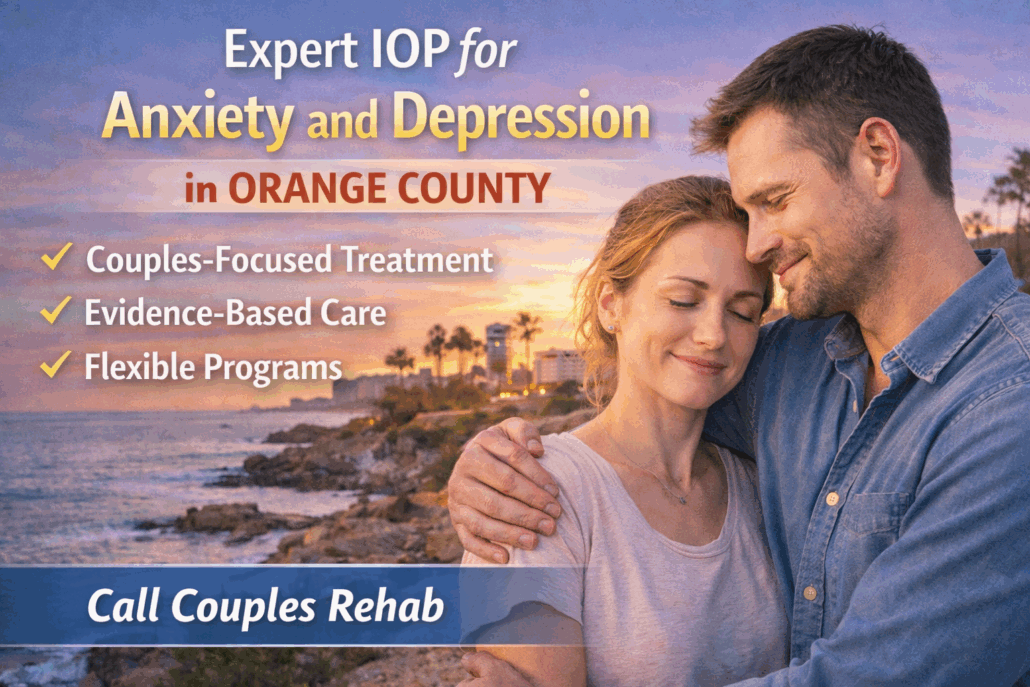
Couples Rehab in Huntington Beach specializes in this exact intersection: providing intensive outpatient mental health treatment that recognizes your recovery doesn’t happen in isolation. Whether you’re seeking individual treatment or our specialized couples-focused programming, our approach integrates evidence-based therapies with the understanding that anxiety and depression impact—and are impacted by—your most important relationships.
Couples Rehab
17011 Beach Blvd Suite 900 PMD#691, Huntington Beach, CA 92647
Phone: (888) 500-2110
Google Maps
Understanding IOP: More Than Just “Therapy Multiple Times Per Week”
The terminology around behavioral health levels of care can feel deliberately opaque. PHP, IOP, standard outpatient, residential, inpatient—these designations aren’t just administrative categories. They represent carefully calibrated clinical frameworks designed to match treatment intensity with symptom severity, functional capacity, and support needs.
What defines Intensive Outpatient Programs:
Licensed mental health iop facilities Orange County must provide minimum 9 hours of structured clinical programming weekly under California Department of Health Care Services regulations. Most quality intensive outpatient programs for mental health Orange County CA deliver 9-12 hours across three to five days, with each session lasting three to four hours.
But the defining characteristic isn’t just time—it’s therapeutic density. When you attend mental health IOP Orange County CA programming three or four times weekly, you’re creating a fundamentally different treatment experience than weekly therapy offers. Consider the difference: In traditional outpatient therapy, you discuss a coping skill on Thursday at 3 PM, attempt to implement it independently for the next seven days, then report back the following Thursday. In that week, you’ve likely encountered multiple triggering situations, experienced varying success with the technique, and possibly developed misconceptions about “doing it right.”
In IOP, you learn the skill Monday, practice it in real-time with clinician guidance, attempt it at home Monday evening, return Wednesday to troubleshoot what worked and what felt impossible, refine your approach with immediate expert feedback, and practice again. This compressed feedback loop accelerates skill acquisition exponentially.
The clinical threshold for IOP appropriateness:
Not everyone benefits from IOP—and that’s by design. If you’re functioning reasonably well with weekly therapy, there’s no clinical rationale for more intensive treatment. Conversely, if you’re experiencing active suicidal planning, recent suicide attempts, psychotic symptoms, or severe substance withdrawal requiring medical monitoring, you need a higher level of care than IOP provides.
The IOP sweet spot: moderate to severe symptoms causing significant functional impairment, but psychiatric stability sufficient to safely live at home between sessions. Specifically:
- Anxiety or depression substantially disrupting work performance, relationship quality, or basic self-care despite ongoing treatment attempts
- Panic attacks, severe worry, depressive episodes interfering with daily responsibilities
- Recent step-down from hospitalization, residential treatment, or Partial Hospitalization requiring structured transition support
- Co-occurring conditions—anxiety plus depression, mental health plus substance use—needing integrated, coordinated treatment
- Recognition that weekly therapy isn’t creating meaningful change, but hospitalization isn’t medically necessary
At Couples Rehab, we also serve a unique population: couples where one or both partners need IOP-level care. When anxiety or depression strains your relationship to the breaking point, individual recovery intertwines with relationship healing.
The Neuroscience of Anxiety and Depression: Why Integrated Treatment Matters
Understanding why anxiety and depression so frequently co-occur requires basic neuroscience literacy—not because you need to become an expert in brain chemistry, but because insight into what’s happening physiologically can reduce shame and inform treatment choices.
Overlapping neural circuits:
Both anxiety disorders and major depressive disorder involve dysregulation in interconnected brain regions: the prefrontal cortex (executive function, decision-making, emotional regulation), the amygdala (fear processing, threat detection), the hippocampus (memory formation, contextual learning), and the anterior cingulate cortex (conflict monitoring, emotional regulation).
However, the symptomatic manifestations diverge considerably. Anxiety typically presents as hyperarousal—racing thoughts, physical restlessness, catastrophic thinking, hypervigilance, an overactive threat-detection system constantly signaling danger. Your sympathetic nervous system stays chronically activated: elevated heart rate, shallow breathing, muscle tension, digestive disruption.
Depression, conversely, often manifests as hypoarousal—emotional numbness, cognitive fog, psychomotor retardation, pervasive hopelessness, anhedonia (inability to experience pleasure). Your brain’s reward circuits underfunction; activities that once brought joy feel pointless. Getting out of bed requires monumental effort.
Many people experience both simultaneously: anxious rumination about perceived failures alongside depressive conviction that nothing will improve. Or alternating states—depressive episodes punctuated by anxiety attacks, or baseline anxiety with depressive crashes when exhaustion overwhelms you.
Why this matters for treatment:
Quality anxiety and depression treatment centers Orange County don’t apply identical interventions to everyone with mood disorders. Our clinical programming at Couples Rehab differentiates between:
- Anxious depression: Characterized by significant worry, rumination, and physical agitation alongside depressed mood
- Melancholic depression: Classic presentation with profound anhedonia, early morning awakening, psychomotor retardation
- Atypical depression: Mood reactivity (mood improves temporarily with positive events), increased sleep and appetite, leaden paralysis
- Panic disorder with agoraphobia: Recurrent unexpected panic attacks with avoidance of situations where escape feels difficult
- Generalized anxiety disorder: Excessive worry about multiple life domains, difficulty controlling worry, physical tension
- Social anxiety disorder: Intense fear of social evaluation, avoidance of social situations, safety behaviors
Each presentation benefits from tailored interventions. Someone with panic disorder needs exposure-based treatment systematically confronting feared situations. Someone with melancholic depression needs behavioral activation scheduling valued activities even without motivation. Someone with anxious depression might need both.
For comprehensive approaches, explore our specialized outpatient anxiety treatment in Orange County CA and outpatient depression treatment Orange County CA programs.
Evidence-Based Treatment Modalities in Orange County IOPs
The phrase “evidence-based” has become so ubiquitous in mental health marketing that it risks losing meaning. True evidence-based practice means implementing specific, manualized treatment protocols with documented efficacy in randomized controlled trials, not just generally following therapeutic principles informed by research.
Cognitive Behavioral Therapy (CBT) in action:
CBT operates on a deceptively simple premise: thoughts, feelings, and behaviors reciprocally influence each other. Changing any component affects the others. In depression iop clinics Orange County CA utilizing genuine CBT protocols, you’re not just discussing this concept abstractly—you’re identifying your specific cognitive distortions in real-time.
For anxiety, CBT includes systematic exposure—gradually confronting feared situations while learning that anxiety peaks and naturally subsides without catastrophe. If you have social anxiety, this might mean speaking in IOP group (real exposure with immediate support), then making small talk with a cashier, then initiating conversation with a colleague, progressively approaching more anxiety-provoking situations.
For depression, behavioral activation challenges the waiting-for-motivation trap. Depression tells you to wait until you feel better before engaging in activities. Behavioral activation proves that action precedes motivation—scheduling and completing valued activities even when you feel nothing, then noticing subtle mood improvements that follow engagement.
Dialectical Behavior Therapy (DBT) skills:
Originally developed for borderline personality disorder, DBT has proven remarkably effective for mood disorders characterized by emotional dysregulation. Our DBT IOP specialists Orange County CA teach four modules:
Mindfulness forms the foundation—developing present-moment awareness without judgment, observing thoughts and emotions without being controlled by them. In IOP, you’re practicing mindfulness multiple times weekly, not just conceptualizing it. You might practice mindful breathing when someone arrives visibly anxious, do body scans after emotionally intense groups, or use mindfulness to create space between triggering thought and reactive behavior.
Distress tolerance prevents crisis escalation. When overwhelmed by anxiety or depressive hopelessness, these skills help you survive the moment without destructive action—self-harm, substance use, impulsive decisions, or relationship-damaging behavior. Techniques include self-soothing through five senses, radical acceptance of reality, distraction strategies, and pros-cons analysis.
Emotion regulation addresses intensity and lability of emotional experiences. For high-functioning individuals whose internal emotional chaos contrasts sharply with external competence, these skills teach increasing positive emotions, reducing vulnerability to negative mood states, and riding emotional waves without amplifying them.
Interpersonal effectiveness maintains relationships while getting needs met—particularly challenging when anxiety makes asking for help feel impossible, or depression convinces you you’re burdening others. Skills include assertiveness (DEAR MAN), maintaining relationships while setting boundaries (GIVE), and preserving self-respect in interactions (FAST).
Additional therapeutic approaches:
Progressive psychiatric IOP clinics Orange County integrate multiple modalities:
- Acceptance and Commitment Therapy (ACT): Teaching psychological flexibility—staying present with uncomfortable emotions while taking values-based action. ACT’s “defusion” techniques help you create distance from thoughts (“I’m having the thought that I’m worthless” versus “I’m worthless”).
- EMDR (Eye Movement Desensitization and Reprocessing): For anxiety and depression rooted in trauma—childhood abuse, assault, accidents, sudden loss—EMDR facilitates adaptive processing of traumatic memories through bilateral stimulation.
- Motivational Interviewing: Resolving ambivalence about change, building intrinsic motivation, working through the push-pull of wanting recovery while fearing change.
- Mindfulness-Based Stress Reduction (MBSR): Cultivating sustained attention to present experience as antidote to anxious future-focus or depressive past-rumination.
For regional context, you might also explore mental health IOP San Diego CA and mental health IOP Los Angeles CA for understanding Southern California’s broader IOP landscape.
Daily IOP Structure: Demystifying the Experience
Knowing what to expect reduces anxiety about beginning treatment. Let’s walk through what those nine to twelve weekly hours actually entail.
Schedule configurations at intensive outpatient centers for anxiety Orange County:
Most programs offer two primary tracks. Morning sessions typically run 9:00 AM – 12:00 PM, three to four days weekly. This works well for students with afternoon classes, individuals on medical leave maintaining some structure, or parents whose children attend school.
Evening IOP programs for anxiety Orange County CA—usually 6:00 PM – 9:00 PM—accommodate working professionals. At Couples Rehab, our evening programming serves Orange County’s diverse workforce: healthcare professionals with rotating shifts, entertainment industry workers with unpredictable schedules, executives who can’t take extended daytime leave, and couples where work schedules must be coordinated with treatment.
Inside a three-hour IOP session:
Each day follows structured format maximizing therapeutic benefit:
Community opening (20 minutes): Not casual socializing—this is structured check-in where clients briefly share current emotional state, challenges since last session, goals for today, and immediate concerns. Trained facilitators from our team of licensed IOP therapists Orange County CA identify crisis indicators, track symptom patterns across sessions, and adjust programming based on emerging group needs. This time builds therapeutic community—the sense of shared struggle and mutual support that becomes profoundly healing.
Psychoeducation component (35-45 minutes): Rotating curriculum covering neurobiology of anxiety and depression, stress response physiology, sleep architecture and mental health, nutrition’s impact on mood, medication mechanisms and side effects, communication strategies, and boundary-setting. We provide sophisticated clinical information made accessible and immediately applicable—not elementary content but graduate-level concepts translated for practical use.
Evidence-based therapy group (70-80 minutes): The clinical core. Monday might focus on cognitive restructuring for depressive thinking. Wednesday could involve exposure exercises for various anxiety presentations. Friday might integrate mindfulness practice with relapse prevention. The approach varies based on programming calendar, but evidence based IOP programs Orange County CA maintain treatment fidelity to research-supported protocols.
Skills application (30-40 minutes): Learning about skills differs from learning to use them. This segment involves hands-on practice—actually doing progressive muscle relaxation (not just hearing about it), role-playing difficult conversations, practicing assertiveness skills, working through real scenarios you’ll face at home. You receive immediate feedback, troubleshoot obstacles, refine techniques before attempting them independently.
Individual closure (10-15 minutes): Brief one-on-one time with primary therapist for personalized homework assignment, addressing private concerns, and individual treatment plan review.
Beyond group sessions:
Quality IOPs also include weekly individual therapy (minimum 50 minutes) with your primary clinician for processing trauma, addressing shame, working through relationship issues, and personalizing treatment to your unique circumstances. Clients requiring psychiatric medications receive regular appointments with our psychiatric IOP doctors Orange County for evaluation, prescription management, and monitoring.
At Couples Rehab, couples in our specialized programming also attend weekly couples therapy sessions addressing how individual mental health challenges interact with relationship dynamics.
Specialized Programming: Treatment That Fits Your Life
Mental health treatment effectiveness increases dramatically when it acknowledges the specific contexts, identities, and circumstances people bring to recovery.
Couples-focused intensive outpatient treatment:
This represents our unique specialty. When both partners struggle with mental health challenges, or when one partner’s anxiety or depression significantly impacts relationship quality, couples-integrated programming addresses:
- How depression in one partner affects communication, intimacy, and conflict resolution
- Managing anxiety’s impact on relationship trust and emotional availability
- Breaking pursue-withdraw patterns where one partner seeks connection while the other withdraws
- Coordinating individual recovery while maintaining relationship health
- Supporting the non-diagnosed partner without enabling avoidance or accommodation patterns that maintain symptoms
- Rebuilding intimacy disrupted by mental illness
- Preventing relationship crisis during intense individual treatment
This doesn’t mean all treatment occurs together—you each need individual space for personal work. But regular couples sessions integrate individual progress with relationship goals.
Gender-specific considerations:
Women’s IOP centers for anxiety Orange County CA address presentations disproportionately affecting women: postpartum depression IOP clinics Orange County CA for new mothers experiencing perinatal mood disorders, anxiety related to reproductive health decisions, body image concerns intersecting with depression, and trauma histories including sexual assault. Programming considers hormonal influences on mood, provides lactation-compatible medication management, and connects mothers with childcare resources.
Men’s depression IOP programs Orange County recognize that male socialization often complicates help-seeking. Depression in men frequently presents through irritability, anger, risk-taking, or substance use rather than sadness. Creating psychologically safe spaces where vulnerability isn’t equated with weakness allows genuine emotional processing.
Age and life-stage programming:
Young adult IOP clinics Orange County CA (ages 18-26) address emerging adulthood’s unique stressors: identity formation, educational pressures, career uncertainty, first serious relationships, social comparison intensified by social media, and often first onset of major mental illness. Programming integrates life skills—managing finances, maintaining employment, navigating higher education—alongside mental health treatment.
Teen anxiety IOP programs Orange County require developmentally appropriate interventions recognizing adolescent neurodevelopment, peer relationships’ outsized influence, and family involvement’s critical role. Family therapy occurs more frequently than adult programming, helping parents understand mental health conditions and modify communication patterns.
Outpatient depression programs for seniors Orange County address late-life depression’s unique presentation—often through physical complaints, cognitive concerns, or withdrawal rather than expressed sadness. Programming considers medical complexity, grief and loss processing, retirement transitions, and social isolation.
Identity-affirming treatment:
LGBTQ friendly IOP clinics Orange County CA provide culturally competent care recognizing sexual and gender minorities experience significantly elevated anxiety and depression rates, largely attributable to minority stress—chronic stress from discrimination, stigma, family rejection, and lack of acceptance. Affirming care includes:
- Clinicians trained in LGBTQ+ mental health competencies
- Groups where clients discuss identity-related stressors without educating peers
- Understanding how gender dysphoria intersects with depression, coming-out anxiety, or relationship strain
- Using correct names and pronouns consistently
- Connections to LGBTQ+ community resources and affirming ongoing care providers
Professional and executive tracks:
Executive IOP centers for depression Orange County serve high-achievers whose symptoms manifest through burnout, perfectionism, imposter syndrome, and work-related stress. Programming offers evening scheduling minimizing professional disruption, peer groups of other professionals understanding career pressures, and consultation on workplace disclosure decisions and ADA accommodations.
Trauma-responsive programming:
Trauma informed IOP centers Orange County operate from understanding that many individuals with anxiety and depression have trauma histories—childhood abuse, sexual assault, intimate partner violence, accidents, military combat. Trauma-informed care creates physical and emotional safety, offers choice and control in treatment, understands symptoms through trauma lens (hypervigilance as learned survival response, not paranoia), and avoids retraumatization through thoughtful clinical practices.
Navigating Insurance and Treatment Costs
Financial concerns shouldn’t prevent accessing needed mental health care, yet insurance coverage remains among the most confusing treatment aspects. Here’s practical information about paying for IOP in Orange County.
California’s mental health parity framework:
California’s Mental Health Parity Act requires insurance companies cover mental health treatment equivalently to physical health treatment. If your PPO plan covers physical therapy at 80% after deductible, it must cover IOP at 80% after deductible. However, several factors complicate this:
In-network versus out-of-network:
PPO insurance IOP clinics Orange County in-network with your plan have negotiated contracted rates. You typically pay only your mental health copay (commonly $25-$75 per session) with insurance covering remaining contracted amounts.
Out-of-network providers—including many mood disorder IOP centers Orange County CA—allow seeking care from any licensed facility, but you’ll pay higher percentage of costs (typically 30-40%) after meeting your out-of-network deductible (often $3,000-$6,000 annually). At Couples Rehab, we work with most major insurance carriers and help determine your specific coverage.
Medical necessity determinations:
Insurance doesn’t automatically approve IOP because a clinician recommends it. Utilization review evaluates whether you meet medical necessity criteria based on symptom severity, functional impairment, and previous treatment insufficiency. This requires comprehensive clinical documentation from assessing clinicians.
Most Anthem Blue Cross IOP centers Orange County receive initial authorization for two to four weeks. Continued authorization requires demonstrated clinical progress through standardized assessment measures, reduced crisis incidents, improved functioning, and active treatment participation.
Major Orange County insurance carriers:
- Kaiser IOP providers Orange County CA: Kaiser’s closed HMO system requires using Kaiser facilities. While Kaiser offers mental health IOPs, waitlists often extend four to eight weeks. Some Kaiser members use out-of-network benefits when Kaiser can’t provide timely access.
- Anthem Blue Cross: Generally strong IOP coverage with many Orange County facilities in-network. Verify your specific plan’s behavioral health network.
- Aetna IOP programs Orange County CA: Typically 70-80% coverage of out-of-network costs after deductible. Prior authorization usually takes three to five business days.
- Cigna mental health IOP clinics Orange County: Coverage varies by plan, but most offer reasonable out-of-network benefits.
- Blue Shield IOP facilities Orange County CA: Behavioral health administered through MHN (Managed Health Network). Coverage depends on specific plan design.
- UnitedHealthcare IOP programs Orange County: Behavioral health managed through Optum. Generally good coverage with clear authorization processes.
Alternatives for those without insurance:
Affordable IOP centers for depression Orange County offer sliding scale fees based on documented income—potentially $100-$300 daily for qualifying individuals versus standard $400-$600 daily rates.
Orange County Health Care Agency’s Behavioral Health Services provides county-funded mental health services including IOP at no cost or low cost for eligible residents—generally those with Medi-Cal or meeting income criteria (often 200% of federal poverty level).
Medicaid IOP providers Orange County CA (Medi-Cal in California) serve eligible low-income residents, though finding Medi-Cal-accepting providers can be challenging as reimbursement rates are significantly lower than commercial insurance.
The verification process at Couples Rehab:
When you call (888) 500-2110, our admissions team conducts comprehensive insurance verification before you commit to treatment. We verify:
- Current deductible status and out-of-pocket maximum
- Co-insurance percentage for mental health services
- Whether prior authorization is required
- Estimated out-of-pocket costs for typical 8-12 week program
- Whether we’re in-network or out-of-network with your specific plan
We provide written cost estimates—no surprises, no hidden fees appearing later.
Virtual IOP: Telehealth Access Across Orange County
The telehealth expansion during COVID-19 revealed what many clinicians understood: for anxiety and depression treatment, therapeutic relationship and clinical content matter more than physical proximity. Virtual mental health IOP programs Orange County now offer fully viable alternatives to in-person treatment.
Telehealth IOP structure:
Virtual IOP provides identical clinical structure to in-person programming via HIPAA-compliant video platforms. You attend scheduled sessions from private, quiet locations with reliable internet—typically home, though some use private offices or suitable spaces.
Sessions include identical components: community check-ins, psychoeducation modules, evidence-based therapy groups, skills practice (often using breakout rooms for smaller exercises), and individual check-outs. Technology facilitates rather than hinders therapeutic connection when implemented thoughtfully.
Clinical outcomes research:
Studies published in major psychiatric journals demonstrate telehealth IOP produces outcomes comparable to in-person treatment for anxiety and depression. Success factors aren’t technological—they’re identical to in-person predictors: treatment engagement, homework completion, authentic group participation, and recommendation follow-through.
Advantages of virtual programming:
For many Orange County residents, telehealth IOP offers distinct benefits:
- Eliminates commute: In Orange County traffic, 15 miles can require 45-60 minutes each direction. Virtual IOP reclaims this time.
- Increases accessibility: Individuals with disabilities, chronic illness, immunocompromised status, or transportation challenges access treatment safely.
- Geographic flexibility: South Orange County residents (San Clemente, Laguna Niguel, San Juan Capistrano) access programs without lengthy drives.
- Maintains privacy: Some prefer not being seen entering mental health facilities. Virtual participation offers discretion.
- Balances childcare: Parents attend during school hours without arranging transportation.
Insurance coverage:
Most California insurance plans cover telehealth IOP identically to in-person treatment following emergency regulations made permanent by state legislature. However, verify with your plan—some require providers be licensed and physically located in California.
Visit our outpatient services page for detailed information about both in-person and virtual programming options.
Dual Diagnosis: Integrated Treatment for Complex Presentations
If you’re struggling with both mental health symptoms and substance use, you’re far from alone. Approximately 50% of individuals with severe mental illness also experience substance use disorders, and roughly 50% of people with substance use disorders have co-occurring mental health conditions.
Understanding the bidirectional relationship:
Anxiety, depression, and substance use interact in complex, reciprocal ways:
- Self-medication patterns: Using alcohol to quiet anxious thoughts before social situations, stimulants to counteract depressive lethargy, benzodiazepines to manage panic attacks
- Substance-induced symptoms: Cocaine causing panic attacks, alcohol withdrawal causing severe anxiety, stimulant withdrawal causing depression
- Shared neurobiology: Overlapping brain circuits involved in reward processing, stress response, and emotional regulation
- Reciprocal maintenance: Substance use worsens mental health symptoms, which triggers more substance use
Why integrated dual diagnosis matters:
Historically, addiction and mental health treatment operated separately. You’d be told “get clean first, then address your depression” or “stabilize your mental health, then deal with drinking.” This sequential approach failed recognizing these conditions continuously influence each other.
Dual diagnosis IOP facilities Orange County CA provide integrated treatment where your therapist, psychiatrist, and case manager collaborate on unified treatment planning. If social anxiety triggers your alcohol use, treatment addresses both underlying anxiety and alcohol dependence simultaneously.
At Couples Rehab, integrated dual diagnosis programming includes:
- Addiction-focused interventions: Relapse prevention planning, cravings management, trigger identification, 12-step facilitation or alternative recovery models (SMART Recovery, Refuge Recovery)
- Mental health-focused interventions: CBT for depression and anxiety, trauma processing, emotion regulation skills, medication management
- Concurrent psychiatric care: Medications that don’t interact dangerously with substance use history, medication-assisted treatment for opioid or alcohol use disorders when appropriate
- Unified recovery planning: Recognizing anxiety, depression, and substance use recovery aren’t separate projects but intertwined processes
Our approach recognizes that in relationships, dual diagnosis complexity multiplies. When one partner struggles with depression and alcohol use while the other manages anxiety and prescription medication dependence, coordinated treatment addressing individual conditions and relationship dynamics becomes essential.
Selecting the Right Program: Questions That Matter
Orange County hosts numerous outpatient behavioral health centers Orange County, but clinical quality varies dramatically. Asking strategic questions during initial inquiries identifies programs offering genuine excellence versus those prioritizing profit over patient outcomes.
Licensing and accreditation verification:
Every California mental health facility must hold current Department of Health Care Services (DHCS) licensure ensuring minimum safety standards, staffing ratios, and clinical protocols. Beyond state requirements, Joint Commission accreditation (“Gold Seal”) represents voluntary adherence to higher quality standards including outcome measurement and continuous improvement.
Ask directly: “Are you currently licensed by California DHCS? Do you hold Joint Commission accreditation?” If the first answer isn’t “yes,” end the call. If they don’t pursue Joint Commission accreditation, ask why.
Staff qualifications:
Beautiful facilities with ocean views create compelling promotional materials, but clinical outcomes correlate with staff expertise, not aesthetics. When evaluating any intensive outpatient specialists Orange County, ask:
- “What percentage of clinical staff are independently licensed (LCSW, LMFT, PhD, PsyD) versus registered interns or associate-level clinicians working under supervision?”
- “Do your therapists specialize in mood disorders, or is this primarily addiction treatment that also addresses mental health?”
- “What’s your staff-to-client ratio during group therapy?”
- “What’s average staff tenure? How frequently do therapists leave?”
Quality programs maintain majority-licensed staff with specialized mood disorder training. High turnover suggests organizational problems impacting treatment continuity.
Treatment individualization:
Ask: “Walk me through how treatment differs for a high-functioning professional with anxiety versus someone in acute crisis stepping down from hospitalization.”
Red flag: “All clients receive the same evidence-based programming.” Reality: Effective treatment individualizes interventions based on symptom severity, trauma history, co-occurring conditions, cultural background, and life circumstances.
Individual therapy inclusion:
Ask: “How many hours of individual therapy are included weekly? With my primary therapist or rotating clinicians? Included in program cost or charged separately?”
Quality indicator: Minimum one 50-minute individual session weekly with your primary therapist, included in comprehensive program cost. Red flag: Only “as-needed” individual therapy or separate charges.
Couples-specific considerations:
If seeking couples treatment, ask additional questions:
- “How do you coordinate individual therapy, couples therapy, and group therapy for partners both in treatment?”
- “What’s your approach when one partner is ready for discharge but the other needs continued treatment?”
- “Do you offer couples groups where partners learn skills together?”
- “How do you handle situations where relationship conflict escalates during intensive treatment?”
Essential Mental Health Resources for Orange County Residents
Informed treatment decisions require access to verified, reliable resources. These federal, state, and local organizations provide everything from immediate crisis support to long-term advocacy and insurance navigation.
Federal Resources (National Standards)
SAMHSA (Substance Abuse and Mental Health Services Administration)
The lead federal agency for behavioral health. SAMHSA’s FindTreatment.gov allows searching accredited mental health and substance use programs nationwide by location, insurance, and services. SAMHSA also operates the National Helpline (1-800-662-HELP) providing free, confidential treatment referrals 24/7.
National Institute of Mental Health (NIMH)
The primary federal agency conducting and funding mental health research. NIMH provides evidence-based patient education on anxiety disorders, depression, bipolar disorder, and other mental illnesses. Visit www.nimh.nih.gov for downloadable brochures and current clinical trial information.
988 Suicide & Crisis Lifeline
Available 24/7 nationwide. Call or text 988 for immediate connection to trained crisis counselors providing confidential support, crisis intervention, and local resource connections.
Mental Health America (MHA)
Leading community-based nonprofit dedicated to addressing needs of people with mental illness. MHA offers free mental health screening tools, advocacy resources, and local affiliate connections. Visit www.mhanational.org.
State of California Resources
California Department of Health Care Services (DHCS)
State agency overseeing all mental health programs, Medi-Cal specialty mental health services, and facility licensing. DHCS maintains official directories of licensed behavioral health facilities. Visit www.dhcs.ca.gov.
CalHOPE
Provides free mental health support, wellness resources, and peer counseling for California residents. CalHOPE operates emotional support lines, virtual support groups, and crisis counseling. Call the CalHOPE Warm Line at 833-317-HOPE (4673).
NAMI California
California chapter of National Alliance on Mental Illness, providing advocacy, education, and support statewide. NAMI California offers free programs including Family-to-Family education courses, Peer-to-Peer support groups, and In Our Own Voice presentations. Visit www.namica.org.
Department of Managed Health Care (DMHC)
If insurance providers deny IOP coverage, delay authorization unreasonably, or create difficulty accessing benefits, DMHC helps California consumers resolve disputes. File complaints online at www.dmhc.ca.gov or call 1-888-HMO-2219.
Los Angeles & Orange County Local Resources
Los Angeles County
LA County Department of Mental Health (LACDMH)
- 24/7 Help Line: (800) 854-7771 – Primary access point for LA County mental health services
- Access Centers: Walk-in locations for crisis assessment and service referrals
- Visit dmh.lacounty.gov
Didi Hirsch Mental Health Services
Premier LA-based nonprofit operating the nation’s first Suicide Prevention Center.
- Crisis Line: (877) 727-4747 (24/7)
- Visit www.didihirsch.org
211 LA County
Dial 2-1-1 for comprehensive directory of all health, human, and social services in LA County. Available 24/7 with multilingual specialists.
Orange County
OC Health Care Agency – Behavioral Health Services
- OC Links: (855) 625-4657 – 24/7 information and referral line connecting residents to Orange County’s behavioral health system
- Crisis Prevention Hotline: (877) 7-CRISIS
- Visit www.ochealthinfo.com/bhs
Be Well OC
Transformative public-private partnership improving Orange County’s mental health and substance use disorder systems. Operates crisis stabilization units providing short-term residential crisis services.
- Visit www.bewelloc.org
NAMI Orange County
Local education, support groups, and advocacy.
- Warmline: (714) 991-6412 – Peer-operated phone support for non-crisis emotional support
- Support Groups: Free weekly groups throughout Orange County
- Visit www.namioc.org
Major Health Systems (LA/OC)
UCLA Resnick Neuropsychiatric Hospital
Nationally ranked psychiatric facility offering comprehensive mental health services including intensive outpatient programs.
- Visit www.uclahealth.org
Cedars-Sinai Behavioral Health
Advanced psychiatric care including intensive outpatient programming and specialized mood disorder treatment.
- Visit www.cedars-sinai.org
Hoag Mental Health Center (Newport Beach)
Leading Orange County psychiatric care resource offering inpatient, partial hospitalization, and intensive outpatient services.
- Visit www.hoag.org
The Orange County IOP “First Call” Checklist
When contacting mental health IOPs, having prepared questions helps evaluate genuine clinical quality versus marketing. Use this checklist during admissions calls.
1. Clinical Integrity Verification
Licensing & Accreditation
“Are you currently licensed by California DHCS? Do you hold Joint Commission accreditation?”
Essential: State licensure is mandatory. Joint Commission accreditation indicates quality commitment and outcome measurement.
Treatment Individualization
“How would treatment differ for someone with high-functioning anxiety working full-time versus someone in acute crisis from hospitalization?”
Quality indicator: Specific, detailed explanations acknowledging different presentations require different interventions. Red flag: “Everyone receives identical evidence-based programming.”
Staff Credentials
“What percentage of clinical staff are independently licensed (LCSW, LMFT, PhD, PsyD) versus interns or associates?”
Quality indicator: Majority licensed staff (70%+) with specialized mood disorder training.
Individual Therapy Guarantee
“How many hours of individual therapy are guaranteed weekly? With my primary therapist? Included in base cost?”
Quality indicator: Minimum one 50-minute individual session weekly with primary therapist, included in program cost.
2. Insurance & Financial Transparency
Network Status
“Are you in-network with my specific insurance plan? If out-of-network, what are my out-of-pocket costs?”
Get specifics, not vague reassurances about “working with all major insurances.”
Comprehensive Cost Breakdown
“What’s my estimated out-of-pocket cost for full program duration? Are psychiatric appointments, individual therapy, assessments, and drug testing included or billed separately?”
Quality indicator: Clear written estimates before admission. All clinically necessary services included.
Authorization Process
“Do you handle insurance authorization, or do I coordinate that? How long does authorization take?”
Quality indicator: Facility handles authorization paperwork and provides copies before treatment starts.
3. Schedule & Lifestyle Compatibility
Evening/Weekend Options
“Do you offer evening sessions after 6:00 PM? Weekend programs?”
Verify schedule compatibility before committing.
Virtual Availability
“Do you offer virtual IOP? Any difference in cost or insurance coverage for virtual versus in-person?”
Quality indicator: HIPAA-compliant platform, identical structure, same insurance coverage.
Couples-Specific Options (if applicable)
“How do you structure treatment when both partners need IOP? Do you offer couples therapy as part of programming?”
Quality indicator: Clear explanation of individual, couples, and group therapy integration.
4. Aftercare & Transition Planning
Post-IOP Support
“What aftercare services follow IOP completion? Alumni support? Outpatient therapy referrals?”
Quality indicator: Comprehensive transition planning including outpatient referrals, alumni groups, crisis prevention plans.
Crisis Support
“If I experience crisis outside program hours, what support is available?”
Quality indicator: After-hours crisis line, clear psychiatric emergency protocols.
Frequently Asked Questions: IOP for Anxiety & Depression Orange County
Clinical Definitions & Suitability
What is an Intensive Outpatient Program (IOP) for mental health?
An Intensive Outpatient Program is a structured behavioral health treatment model providing 9-12 hours of clinical services weekly while clients live at home and maintain work, school, or family responsibilities. IOPs treat moderate to severe mental health conditions including anxiety disorders (generalized anxiety, panic disorder, social anxiety, PTSD), major depression, bipolar disorder, and co-occurring substance use disorders. Treatment occurs 3-5 days weekly for 3-4 hours per session, including group therapy using evidence-based modalities (CBT, DBT, ACT, EMDR), individual counseling, psychiatric medication management, psychoeducation, and skills training. IOPs bridge the gap between insufficient weekly outpatient therapy and more intensive residential treatment or hospitalization.
What is the difference between PHP and IOP in Orange County clinics?
Partial Hospitalization Programs (PHP) and Intensive Outpatient Programs (IOP) represent different care intensity levels. PHP provides 5-6 hours daily, 5-7 days weekly, totaling 25-35 hours of structured treatment weekly. PHP serves individuals stepping down from inpatient psychiatric hospitalization or requiring more intensive monitoring than IOP but not 24-hour supervision. IOP requires 9-12 hours weekly across 3-5 days, appropriate for individuals psychiatrically stable enough to function independently between sessions. The typical continuum flows: Inpatient Hospitalization → PHP → IOP → Standard Outpatient Therapy. Clinical assessment, symptom severity, and functional stability determine appropriate level.
How do I know if I need an IOP for anxiety or depression instead of standard therapy?
Consider IOP if: (1) You’ve attended weekly therapy consistently without meaningful symptom relief or functional improvement; (2) Anxiety or depression significantly impairs daily functioning—regularly missing work, relationship deterioration, basic self-care neglect—despite ongoing treatment; (3) You experience frequent crises requiring emergency room visits, crisis hotline use, or brief psychiatric hospitalizations; (4) You have suicidal thoughts or self-harm urges requiring more frequent clinical support than weekly sessions provide; (5) You’re stepping down from higher care levels (hospitalization, residential, PHP) needing structured transition support; (6) You have co-occurring conditions (anxiety plus depression, mental health plus substance use) requiring integrated treatment. If you’re stable, maintaining functioning, and progressing with weekly therapy, continue that level. IOP is appropriate when you need significantly more support but don’t require round-the-clock supervision.
Who is the ideal candidate for a Mental Health IOP?
The ideal IOP candidate meets these clinical criteria:
(1) Moderate to severe anxiety, depression, or other mental health symptoms requiring more intensive intervention than weekly therapy but not hospitalization;
(2) Medical stability—no detoxification needs or medication stabilization requiring inpatient monitoring;
(3) Psychiatric stability—suicidal or homicidal thoughts may be present but the person can safely manage between sessions without 24-hour supervision;
(4) Safe, supportive living environment—housing stability, absence of active domestic violence, adequate basic resources;
(5) Ability to attend treatment consistently—reliable transportation or telehealth access, schedule flexibility for 9-12 weekly hours;
(6) Motivation and willingness to participate actively—readiness for difficult therapeutic work, openness to group therapy, commitment to practicing skills between sessions. IOP works optimally for individuals ready to engage deeply while maintaining daily responsibilities.
Can an IOP treat both depression and substance use (Dual Diagnosis)?
Yes, integrated dual diagnosis IOPs simultaneously treat co-occurring mental health and substance use disorders rather than sequential treatment. Research consistently demonstrates concurrent treatment produces superior outcomes to separate treatment. The relationship between depression/anxiety and substance use is bidirectional and complex: anxiety or depression may trigger substance use as self-medication; substance use and withdrawal create or exacerbate mental health symptoms; both conditions share overlapping brain circuits and neurotransmitter systems. Integrated treatment addresses these interconnections.
Your treatment team—therapist, psychiatrist, case manager—collaborates on unified plans incorporating addiction-focused interventions (trigger understanding, relapse prevention, cravings management, 12-step facilitation) alongside mental health interventions (CBT for depression, exposure therapy for anxiety, trauma processing, medication management). Rather than treating depression “first” then addressing substance use “later,” integrated dual diagnosis IOPs recognize you’re one person with interconnected conditions requiring coordinated care.
Program Structure & Daily Life
How many hours a day is a typical IOP session in Orange County?
Most Orange County IOPs provide 3-4 hours per session. Standard structure includes three hours daily, 3-4 days weekly, totaling 9-12 hours weekly. Sessions occur in consolidated blocks—morning tracks typically 9:00 AM-12:00 PM, evening tracks 6:00 PM-9:00 PM. This concentrated format provides therapeutic intensity and skill-building repetition while allowing work, school attendance, or family responsibility management during non-treatment hours. Some programs start with higher intensity (4 hours daily, 4-5 days weekly) then reduce as symptoms stabilize. The three-to-four-hour session length reflects clinical research demonstrating this duration allows meaningful therapeutic work without cognitive fatigue diminishing effectiveness.
How many days per week is the IOP program?
Standard IOPs require attendance 3-4 days weekly. Common schedules include Monday/Wednesday/Friday, Tuesday/Thursday/Saturday, or Monday through Thursday. Some intensive programs initially require 5 days weekly, reducing to 3-4 days as clinical stability improves. Weekend IOPs exist but remain less common than weekday programming. Specific attendance requirements depend on clinical needs—someone transitioning from PHP might attend 4-5 days weekly initially, while someone with stable symptoms entering IOP directly might attend 3 days weekly. Your treatment team adjusts attendance frequency based on symptom severity, treatment response, functional stability, and insurance authorization. Consistent attendance matters enormously—research shows treatment completion and regular attendance are strongest predictors of positive outcomes.
What does a typical day in an Orange County Mental Health IOP look like?
A typical three-hour IOP session includes multiple structured components.
Community Check-In (15-20 minutes): Facilitated sharing where clients briefly report current emotional state, challenges since last session, progress or wins, and today’s goals. Clinicians track symptom trajectories and identify anyone requiring additional support.
Psychoeducation Module (30-40 minutes): Rotating topics covering mood disorder neurobiology, medication mechanisms and side effects, sleep hygiene, nutrition’s mood impact, stress physiology, communication skills, or relationship dynamics. Content is sophisticated and evidence-based.
Core Therapy Group (60-75 minutes): Clinical heart of IOP—evidence-based group therapy utilizing CBT, DBT, ACT, EMDR, or other modalities. Monday might focus on cognitive restructuring for depressive thought patterns, Wednesday on exposure exercises for anxiety, Friday on mindfulness and relapse prevention.
Skills Practice (30-40 minutes): Hands-on practice of specific coping techniques with real-time coaching and troubleshooting. Might practice progressive muscle relaxation, role-play assertive communication, complete thought records, or work through DBT distress tolerance exercises.
Individual Check-Out (10-15 minutes): Brief one-on-one time with primary therapist for personalized homework assignment, private concerns, and individual treatment plan review. Additionally, you receive weekly individual therapy (typically 50 minutes) and medication management appointments as clinically indicated.
Is group therapy mandatory in an IOP?
Yes, group therapy forms the primary treatment modality in IOP and attendance is mandatory. The therapeutic factors of group work—universality (realizing you’re not alone), vicarious learning (observing others’ successes and setbacks), interpersonal learning (receiving feedback about relationship patterns), hope instillation (seeing peers progress), and cohesion—create powerful change mechanisms unavailable in individual therapy alone. Quality IOPs also include individual therapy to address private matters (trauma details, shame, family conflicts requiring confidentiality, medication concerns), personalize interventions, and maintain therapeutic alliance driving treatment engagement. If you’re uncomfortable with group therapy due to social anxiety, discuss concerns during assessment—social anxiety about groups is common and can be addressed clinically as part of treatment. However, unwillingness to participate in group work at all suggests IOP may not be the right treatment fit, as avoiding groups removes core therapeutic elements.
Will I have a personal therapist or just group sessions?
You’ll have both. Quality IOPs assign a primary therapist serving as your clinical case manager throughout treatment. Your primary therapist conducts intake assessment, develops individualized treatment plan, provides weekly individual therapy sessions (typically 50 minutes), facilitates or co-facilitates some group sessions, coordinates with your psychiatrist regarding medications, tracks progress using standardized outcome measures, and leads discharge planning. This structure combines group therapy’s cost-effectiveness and peer support with individual therapy’s personalized attention necessary for addressing trauma, processing shame, troubleshooting specific obstacles, and maintaining engagement. The hybrid model recognizes that while group work offers unique therapeutic factors, certain content requires privacy and individualization. Programs offering only group therapy without consistent individual sessions don’t meet standard IOP clinical protocols and should be avoided.
Do Orange County IOPs offer evening or weekend sessions for working adults?
Many Orange County IOPs, including Couples Rehab, offer evening programming specifically for working professionals. Evening tracks typically operate 6:00 PM-9:00 PM Monday through Thursday, allowing full-time employment with minimal workplace disruption. Some programs offer afternoon sessions (1:00 PM-4:00 PM) for flexible schedules. Weekend IOPs (Saturday or Sunday sessions) exist but are less common—if weekend attendance is essential, ask specifically during initial inquiries. When researching programs, don’t assume all facilities offer schedule flexibility. Some IOPs only operate morning tracks (9:00 AM-12:00 PM), potentially necessitating medical leave, FMLA accommodation, or temporary work schedule modifications. Verify schedule options align with your life circumstances before committing. Some facilities also offer hybrid models—primarily evening attendance with one morning session for psychiatric appointments.
Therapies & Success Rates
What types of evidence-based therapies are used (CBT, DBT, EMDR)?
Quality Orange County IOPs implement multiple evidence-based modalities:
Cognitive Behavioral Therapy (CBT): Gold standard for anxiety and depression, addressing relationships between thoughts, feelings, and behaviors. CBT includes cognitive restructuring (identifying and challenging distorted thought patterns), behavioral activation (systematically increasing valued activities to counteract depression), and exposure therapy (gradually confronting feared situations to reduce anxiety).
Dialectical Behavior Therapy (DBT): Teaching four core skill sets—mindfulness (present-moment awareness), distress tolerance (surviving crises without worsening situations), emotion regulation (reducing mood volatility), and interpersonal effectiveness (maintaining relationships while getting needs met).
Acceptance and Commitment Therapy (ACT): Developing psychological flexibility—staying present with uncomfortable emotions while taking values-based action. ACT emphasizes acceptance over control of internal experiences.
EMDR (Eye Movement Desensitization and Reprocessing): Processing traumatic memories underlying anxiety or depression through bilateral stimulation facilitating adaptive memory consolidation.
Motivational Interviewing (MI): Resolving ambivalence and building intrinsic motivation for change.
Mindfulness-Based Stress Reduction (MBSR): Cultivating non-judgmental present-moment awareness. Programs should clearly describe which modalities they use, have staff trained and certified in these specific approaches, and explain how they select interventions based on individual needs rather than one-size-fits-all treatment.
What is the average success rate for depression recovery in an IOP?
Research indicates 60-70% of clients completing full IOP courses for depression experience clinically significant improvement, typically defined as at least 50% reduction in depression severity on standardized measures like PHQ-9 or BDI. However, “success” encompasses multiple dimensions beyond symptom scores: functional restoration (returning to work, maintaining employment, engaging in relationships, resuming self-care), crisis reduction (fewer emergency room visits, decreased suicidal ideation, reduced self-harm), skills acquisition (independently using coping strategies learned in treatment), and sustained improvement (maintaining gains at 3-month and 6-month follow-up). Success rates are significantly higher when:
(1) Clients complete full recommended program duration rather than leaving prematurely;
(2) Treatment addresses co-occurring issues (trauma, substance use, relationship problems) alongside primary mood disorder;
(3) Clients transition to ongoing outpatient therapy after IOP rather than abruptly ending all treatment;
(4) Medication management is integrated when clinically appropriate. Individual outcomes vary based on depression chronicity, severity at intake, previous treatment history, co-occurring conditions, and social support availability.
Do Orange County IOPs offer TMS or Ketamine-assisted therapy integration?
Some progressive Orange County facilities integrate Transcranial Magnetic Stimulation (TMS) or ketamine-assisted therapy for treatment-resistant depression, though these remain adjunctive to psychotherapy rather than standalone treatments.
TMS: Uses magnetic pulses to stimulate underactive brain regions associated with depression, particularly dorsolateral prefrontal cortex. TMS requires daily 20-40 minute sessions for 4-6 weeks. FDA-approved for major depressive disorder not responding to antidepressants. Generally well-tolerated with minimal side effects.
Ketamine-Assisted Therapy: Involves low-dose ketamine infusions (typically 0.5 mg/kg over 40 minutes) or Spravato (esketamine) nasal spray combined with psychotherapy. Ketamine produces rapid antidepressant effects—often within hours—by modulating glutamate neurotransmission. Typically administered 2-3 times weekly for 2-4 weeks, then maintenance sessions as needed. These interventions require specialized medical oversight, specific equipment, and additional cost beyond standard IOP. If interested in these augmentation strategies, ask facilities whether they offer them on-site, can coordinate with partnering medical providers, or provide referrals. Not all insurance plans cover TMS or ketamine therapy, so verify coverage before pursuing.
How is family therapy involved in the outpatient recovery process?
Family involvement varies significantly based on client age and clinical presentation.
For adolescents and young adults (under 26): Family therapy is typically integral. Weekly or biweekly family sessions help parents understand mental health conditions, learn effective communication strategies, modify family dynamics inadvertently maintaining symptoms, and provide appropriate support without enabling avoidance. Parents also receive psychoeducation about medications, warning signs of deterioration, and crisis response.
For adults: Family therapy is optional, offered based on individual preference and clinical benefit. Some adults prefer keeping family separate from treatment to maintain boundaries and independence. Others find family sessions valuable for educating partners or parents about anxiety and depression, addressing relationship impacts, improving communication, and building supportive home environments reinforcing treatment gains.
For couples: When both partners experience mental health challenges or individual symptoms significantly impact relationship dynamics, couples therapy addresses how symptoms affect communication, intimacy, conflict resolution, and shared goals. At Couples Rehab, our specialized programming integrates individual treatment with couples therapy for comprehensive relationship healing.
Are there specialized programs for LGBTQ+ or veterans in Orange County?
Yes, several Orange County IOPs offer specialized programming recognizing certain populations face unique stressors requiring culturally competent, identity-affirming care.
LGBTQ+ Programs: Provide affirming treatment recognizing sexual and gender minorities experience disproportionately higher rates of anxiety, depression, and suicide, largely attributable to minority stress—chronic stress from discrimination, stigma, family rejection, and societal prejudice. LGBTQ-affirming IOPs include staff trained in gender-affirming care, groups where clients can discuss identity-related stressors without educating peers about LGBTQ+ experiences, understanding of how gender dysphoria intersects with depression or coming-out anxiety, and connections to LGBTQ+ community resources.
Veterans Programs: Offer trauma-focused treatment for PTSD, moral injury, combat-related grief and loss, and transition challenges from military to civilian life. Veterans programs often include veteran peer specialists who’ve personally navigated recovery, understand military culture, and provide credible hope. Many coordinate with VA healthcare systems for medication continuity and disability benefits.
Other Specialized Tracks: First responders programs (law enforcement, paramedics, firefighters facing occupational trauma); postpartum programs for perinatal mood disorders; young adult programs (ages 18-26) addressing emerging adulthood challenges; executive programs with evening scheduling and enhanced privacy; trauma-specific programs using EMDR and trauma-focused CBT; couples programs addressing relationship impacts of mental illness.
Insurance, Cost, & Logistics
Is Mental Health IOP covered by PPO insurance in California?
Yes, PPO insurance plans in California must cover mental health IOP under federal Mental Health Parity and Addiction Equity Act and California’s state parity laws. These laws require insurance companies to cover mental health and substance use disorder treatment at the same level as physical health treatment—meaning if your plan covers physical therapy at 80% after deductible, it must cover IOP at 80% after deductible. Coverage typically includes both in-network and out-of-network benefits, though financial responsibility differs substantially.
In-network coverage: You pay only your mental health copay (commonly $25-$75 per session) with insurance covering remaining contracted amount.
Out-of-network coverage: You pay a percentage of charges (typically 30-40%) after meeting your out-of-network deductible (often $3,000-$6,000 annually). Coverage requires meeting “medical necessity” criteria—symptoms must reach clinical severity thresholds documented through comprehensive assessment justifying intensive treatment. Insurance companies conduct utilization review evaluating medical necessity and authorizing initial treatment (usually 2-4 weeks) with extensions requiring demonstrated progress.
What are the out-of-pocket costs for an IOP if I don’t have insurance?
Self-pay rates for mental health IOP in Orange County vary considerably, typically ranging $350-$600 per day or $4,000-$7,000 for complete 8-week programs. Geographic location, facility amenities, staff credentials, and program reputation influence pricing. However, multiple options exist for those without insurance or with prohibitively high deductibles.
Sliding scale programs: Many nonprofit and community-based IOPs offer sliding scale fees based on documented income, potentially reducing costs to $100-$300 per day for qualifying individuals.
County-funded services: Orange County Health Care Agency’s Behavioral Health Services provides publicly-funded mental health treatment including IOP at no cost or low cost for eligible residents—generally those with Medi-Cal coverage or meeting specific income criteria (often 200% of federal poverty level or below).
Medicaid/Medi-Cal: California’s Medicaid program covers specialty mental health services including IOP for eligible low-income residents, though finding Medi-Cal-accepting providers can be challenging.
Payment plans: Some private programs offer installment payment plans spreading costs over several months rather than requiring full upfront payment. When comparing costs, clarify what’s included—comprehensive rates should include psychiatric appointments, individual therapy, standardized assessments, and necessary drug testing, not charge separately for each component.
How do I verify if my Anthem, Aetna, or Cigna plan covers Orange County IOP?
Verify coverage by calling the behavioral health phone number on your insurance card (different from medical benefits number) and asking specific questions:
(1) “Do I have outpatient mental health benefits covering Intensive Outpatient Programs (IOP)?” Confirm IOP is covered, not just general outpatient therapy.
(2) “Is [specific facility name] in-network with my plan?” Verify the exact facility you’re considering, as networks vary by specific plan type even within the same insurance company.
(3) “What is my in-network copay and out-of-network co-insurance percentage for mental health IOP?” Get specific dollar amounts or percentages.
(4) “What is my mental health deductible—both in-network and out-of-network—and how much have I already met this calendar year?” Crucial for understanding actual costs.
(5) “Is prior authorization required before starting IOP? How long does authorization take?” Some plans require pre-approval; starting without authorization can result in denied claims.
(6) “What is my out-of-pocket maximum for the year, and how much have I met?” Once you reach out-of-pocket max, insurance covers 100%.
(7) “How many IOP sessions are initially authorized, and what’s the process for extending coverage?” Understanding the review process prevents surprises. Write down representative’s name, date, time, and reference number. Most reputable Orange County IOPs, including Couples Rehab, offer free insurance verification services—we contact your insurance company, verify benefits, and provide written cost estimates before you commit.
Is virtual IOP (Telehealth) available for residents in Irvine or Newport Beach?
Yes, many Orange County IOPs now offer HIPAA-compliant telehealth options providing identical clinical structure, content, and intensity via secure video platforms like Zoom for Healthcare, Doxy.me, or SimplePractice Telehealth. Virtual IOP requires attending all scheduled sessions via video from private, quiet, distraction-free locations with reliable high-speed internet—typically your home, though some clients use private offices or suitable spaces. Clinical structure mirrors in-person IOP: community check-ins, psychoeducation modules, evidence-based therapy groups, skills practice (often using breakout rooms for smaller exercises), and individual check-outs.
Research conducted during and after COVID-19 pandemic demonstrates telehealth IOP produces outcomes comparable to in-person treatment for anxiety and depression, with no significant differences in symptom reduction, treatment completion rates, or client satisfaction. Virtual IOP offers distinct advantages: eliminates commute time (significant in Orange County traffic), increases accessibility for those with disabilities or transportation challenges, maintains continuity during illness or travel, provides options for immunocompromised individuals, and offers geographic flexibility for south Orange County residents. Most California insurance plans cover telehealth IOP identically to in-person treatment following emergency regulations made permanent by state legislation.
How long does an average IOP program last (8 weeks vs. 12 weeks)?
Most Orange County IOPs run 8-12 weeks, with duration based on clinical progress and individualized treatment planning rather than predetermined timelines. Initial insurance authorization typically covers 2-4 weeks, with extensions requiring documented clinical improvement evidenced by standardized assessment scores, functional gains, reduced crisis incidents, and active treatment participation. Multiple factors influence specific program length:
Symptom severity at intake: Moderate symptoms may resolve adequately in 6-8 weeks; severe, chronic, treatment-resistant depression may require 12+ weeks.
Co-occurring conditions: Dual diagnosis (mental health plus substance use), complex trauma, or multiple co-occurring disorders typically require longer treatment than single-diagnosis cases.
Treatment response rate: Rapid responders demonstrating quick symptom improvement and skill acquisition may step down sooner; those with slower progress continue longer until clinically stable.
Functional restoration: Treatment continues until you’ve restored functioning in key life domains—returning to work or school, re-engaging with relationships, maintaining self-care, and demonstrating independent use of coping skills. Some IOPs use tiered step-down approaches: starting with higher intensity (9-12 hours weekly, 4-5 days) for 4 weeks, reducing to moderate intensity (9 hours weekly, 3 days) for 4 weeks, then transitioning to standard outpatient care. Your treatment team should provide regular progress updates and involve you in step-down decision-making.
Privacy, Careers, & Transition
Is my treatment confidential and HIPAA compliant?
Yes, all California-licensed mental health treatment facilities must comply with federal HIPAA (Health Insurance Portability and Accountability Act) privacy regulations and California’s Confidentiality of Medical Information Act (CMIA), which provides even stronger protections.
These laws ensure: Your treatment records cannot be released to anyone—family members, employers, schools, other providers—without your explicit written authorization (with specific legal exceptions). Clinical staff cannot confirm or deny you’re a client to anyone contacting the facility without your permission. You control all information sharing—you decide whether parents, partners, or referral sources receive treatment updates. Electronic health records are encrypted and password-protected with audit trails tracking all access.
Legal exceptions to confidentiality exist: Mandated reporting of child abuse, elder abuse, or dependent adult abuse; imminent threats to seriously harm yourself or others (Tarasoff duty to warn); court orders or subpoenas in specific circumstances; specific insurance audits and utilization reviews required for coverage. Your therapist explains these confidentiality limits during intake. For individuals with heightened privacy concerns—executives, public figures, healthcare professionals—facilities can implement additional safeguards like separate entrances, scheduling isolated from other clients, and minimal identifiable information in records. Group therapy participants also sign confidentiality agreements promising not to disclose identifying information about other members.
Can I continue to work or go to school while attending an IOP in LA/OC?
Yes, maintaining employment or education is not only possible but encouraged in IOP—one of the defining advantages over residential treatment or full-day PHP. IOP structure specifically allows continued participation in daily responsibilities.
Evening IOPs (6:00 PM-9:00 PM) accommodate full-time employment with no workplace disclosure or time off required. You work your regular schedule, then attend treatment after work.
Day IOPs (9:00 AM-12:00 PM) require morning availability but leave afternoons free for part-time work, afternoon/evening shifts, or school classes scheduled after noon.
Employment considerations: Many clients maintain full-time work during IOP without informing employers, particularly using evening programs. Others work modified schedules, take partial sick leave (using FMLA intermittent leave if you work for covered employer), use vacation time, or arrange temporary schedule adjustments. If you disclose to your employer, Americans with Disabilities Act (ADA) prohibits discrimination based on mental health conditions and may require reasonable accommodations. However, you’re only required to disclose that you have a medical condition requiring treatment, not specific psychiatric diagnoses.
Academic considerations: Students can often schedule IOP around classes, particularly with evening or afternoon programs. Many universities provide accommodations for students in mental health treatment—reduced course loads, extensions on assignments, excused absences.
What happens after I complete the IOP program (Aftercare & Alumni)?
Completing IOP represents significant milestone but not endpoint of mental health recovery. Quality programs provide comprehensive aftercare planning recognizing recovery continues long after intensive treatment ends.
Effective aftercare includes: Step-down to outpatient therapy: Transitioning to weekly individual therapy with referred therapist in your community who can provide ongoing support, medication management continuity, and intervention if symptoms worsen. Your IOP treatment team should provide specific referrals matched to clinical needs, insurance, and location.
Psychiatric medication continuity: If taking psychiatric medications, ensuring seamless transfer to outpatient psychiatrist or psychiatric nurse practitioner for ongoing medication management, monitoring for side effects, and adjustments as needed.
Alumni programming: Optional ongoing support including alumni support groups (monthly meetings for IOP graduates), quarterly check-ins with former treatment team, and social events maintaining connections with peers from treatment.
Crisis prevention planning: Written relapse prevention plans identifying specific warning signs (early symptoms of depression or anxiety returning), triggers to avoid or manage carefully, coping strategies that worked during IOP, supportive people to contact, and specific action steps if symptoms worsen significantly.
Community resource connections: Referrals to community supports like NAMI support groups, 12-step meetings (for dual diagnosis clients), faith-based recovery groups, meditation or yoga communities, or recreational activities supporting wellness. Your discharge planning should begin weeks before final IOP session, providing ample time to establish outpatient care, build support systems, and prepare for independent mental health management.
How do I start the admissions process for a mental health facility in Orange County?
Beginning IOP treatment requires just a phone call, followed by structured admissions steps ensuring appropriate fit and preparation for successful treatment.
Step 1: Initial Contact – Call Couples Rehab at (888) 500-2110 to speak with an admissions counselor. Be prepared to discuss current symptoms, treatment history, insurance information, and schedule needs. This call typically lasts 20-30 minutes and is completely confidential.
Step 2: Preliminary Screening – Admissions counselor conducts brief phone assessment evaluating whether IOP is appropriate level of care versus PHP, residential, or standard outpatient therapy. This prevents mismatched placements wasting time and money.
Step 3: Insurance Verification – Provide insurance information (front and back of card photos work well). Our business office contacts your insurance company, verifies behavioral health benefits, determines in-network or out-of-network status, confirms your deductible and co-insurance, and secures prior authorization if required. We provide written cost estimates before you commit.
Step 4: Schedule Clinical Assessment – Book comprehensive evaluation (60-90 minutes) with licensed clinician—either in-person at our Huntington Beach facility or via telehealth. Bring current medications, previous psychiatric records if available, and questions about treatment.
Step 5: Complete Clinical Assessment – Meet with evaluating clinician for diagnostic assessment, symptom severity measurement using standardized tools, treatment history review, suicide and safety assessment, substance use evaluation, and collaborative treatment goal setting.
Step 6: Psychiatric Consultation (if needed) – For clients taking psychiatric medications or potentially benefiting from medication, schedule evaluation with our psychiatrist.
Step 7: Program Orientation & First Session – Once insurance authorization confirms and assessment completes, schedule your first IOP session. First day includes program orientation covering confidentiality, treatment expectations, emergency protocols, and introduction to your treatment team.
Timeline: For non-urgent situations, process typically takes 3-7 days from initial call to first IOP session. For urgent situations (recent hospitalization discharge, acute symptom worsening, crisis stabilization), we can expedite admissions within 24-48 hours.
Your Recovery Starts Here
Living with anxiety and depression doesn’t have to mean choosing between completely disrupting your life for residential treatment or struggling indefinitely with insufficient weekly therapy. Intensive Outpatient Programs offer the middle path—clinical rigor and therapeutic support intensive enough to create real change, structure flexible enough to maintain your responsibilities and relationships.
At Couples Rehab in Huntington Beach, we recognize that your recovery doesn’t happen in isolation. Whether you’re seeking individual treatment or our specialized couples-focused programming, we’ve built our approach around the understanding that mental health challenges affect—and are affected by—your most important relationships. Our team of experienced clinicians specializes in mood disorders, trauma-informed care, and the complex dynamics when partners navigate mental health recovery together.
We offer evidence-based treatment protocols proven effective for anxiety and depression, flexible scheduling accommodating diverse lifestyles and professional demands, comprehensive support navigating insurance and treatment logistics, and specialized programming addressing your unique circumstances—whether that’s couples treatment, LGBTQ+-affirming care, dual diagnosis, or other specific needs.
Recovery is possible. It starts with a single decision to reach out for help.
Call Couples Rehab today at (888) 500-2110 or visit our contact page to begin your recovery journey.
Your future self—and the people who love you—will be grateful you did.
