
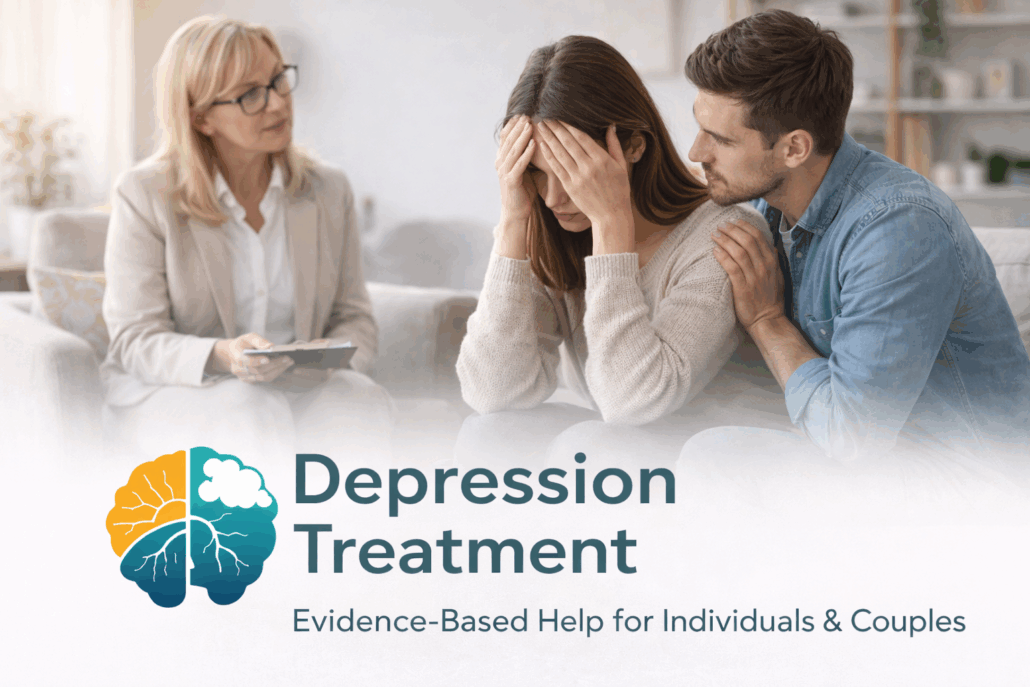
Depression Treatment | Evidence-Based Help for Individuals & Couples
Depression can change the way life feels—quietly at first, then more noticeably over time. It can affect sleep, energy, focus, appetite, motivation, and how connected you feel to the people around you. For many people, depression isn’t just sadness. It’s a persistent heaviness, emotional numbness, or a sense of being “stuck,” even when there’s no obvious reason.
At Couples Rehab, we provide education and referral guidance for individuals and couples seeking effective, evidence-based depression treatment. This page explains what depression looks like in real life, the most effective treatment options, how levels of care work, and how to decide what support makes sense for your situation.
If you or someone you love is experiencing thoughts of self-harm or suicide, call or text 988 in the U.S. or go to the nearest emergency room.
What Depression Really Looks Like
Depression is a medical and psychological condition. It can present differently depending on personality, stress level, life stage, and co-occurring issues like anxiety or substance use.
Some people feel sadness and hopelessness. Others feel:
- emotionally flat or disconnected
- irritable or easily overwhelmed
- physically fatigued or “slowed down”
- guilty, ashamed, or overly self-critical
- unable to enjoy things they used to love
Depression can also show up in ways that look like “burnout,” “laziness,” or “not caring,” which can delay treatment and create relationship conflict.
For a broader framework, see our overview page:
👉 Mood Disorders Treatment
Common Symptoms of Depression
Symptoms can vary in intensity, but depression often includes several of the following:
- Persistent low mood, emptiness, or tearfulness
- Loss of interest or pleasure (anhedonia)
- Fatigue, low energy, or feeling drained
- Sleep changes (insomnia or oversleeping)
- Appetite changes or weight shifts
- Difficulty concentrating or making decisions
- Feeling worthless or like a burden
- Slowed movement or agitation/restlessness
- Social withdrawal
- Thoughts of death or suicide
If symptoms last more than two weeks and interfere with daily functioning, it’s reasonable to seek an assessment.
Depression vs. “Being Down” or Situational Stress
Many people wonder whether they’re experiencing depression or simply reacting to life circumstances. That question makes sense—and it’s one reason an assessment can be so helpful.
Situational stress or sadness tends to:
- be tied to a specific event
- fluctuate throughout the day
- gradually improve over time
Depression tends to:
- persist even when circumstances change
- affect multiple areas of life (sleep, appetite, motivation, relationships)
- create a consistent pattern of impairment
Even if depression started due to a life event, treatment can still help you recover your baseline functioning and resilience.
Evidence-Based Depression Treatment
Depression responds well to evidence-based care. The most effective plans usually combine clinical interventions with practical, sustainable changes that support long-term stability.
1) Therapy for Depression
Psychotherapy is often the foundation of depression treatment. Effective approaches commonly include:
- Cognitive Behavioral Therapy (CBT): helps identify and change negative thought patterns and behaviors
- Behavioral Activation: rebuilds motivation and pleasure through structured activity scheduling
- Interpersonal Therapy: focuses on relationships, grief, conflict, and life transitions
- Trauma-informed therapy: when depression is linked to trauma or chronic stress
A strong therapist will help you move beyond “talking about it” and into actionable recovery work—sleep routines, coping strategies, and skills you can apply daily.
2) Medication Support (When Appropriate)
Medication can be helpful, especially when depression is moderate to severe, persistent, or affecting basic functioning.
Medication is not a “quick fix,” but for many people it can:
- reduce symptom intensity
- improve sleep and energy
- increase your ability to engage in therapy
- stabilize mood enough to rebuild routines
Medication decisions should be individualized and guided by a qualified psychiatric provider.
3) Lifestyle and Routine Stabilization
This is where long-term recovery is often won or lost. Depression can disrupt daily rhythms, and treatment often includes:
- consistent sleep/wake timing
- nutrition and hydration support
- movement and light exposure
- stress boundary setting
- small daily commitments that rebuild confidence
These steps can feel simple, but when depression is present, they require structure and coaching—often best supported by a program.
Depression and Relationships
Depression impacts relationships in predictable ways, even in strong partnerships. Partners often experience:
- reduced intimacy and connection
- emotional withdrawal
- more misunderstandings and conflict
- unequal responsibilities and resentment
- caregiver fatigue or burnout
The depressed partner may feel shame or guilt, which can lead to further withdrawal. The non-depressed partner may feel rejected or helpless, which can become frustration.
In many cases, couples benefit from a coordinated approach: individual depression treatment paired with relationship support to repair communication and rebuild trust.
For a broader view of conditions we cover and how they affect couples and individuals:
👉 What We Treat
Depression and Substance Use (Dual Diagnosis)
Depression and substance use often reinforce each other. Many people use alcohol or drugs to:
- numb emotional pain
- fall asleep
- quiet anxious thoughts
- feel “normal” temporarily
But substance use can worsen depression through sleep disruption, rebound anxiety, mood instability, and withdrawal cycles.
If depression and substance use are both present, integrated care is important. Treating depression without addressing substance use (or vice versa) commonly leads to stalled progress or relapse.
Levels of Care for Depression Treatment
Choosing the right level of care depends on symptom severity, safety, and how much depression is affecting daily functioning.
Outpatient Therapy
Best when:
- you can function at work/school most days
- symptoms are present but manageable
- there is no immediate safety risk
Typically includes weekly therapy and, if needed, psychiatric follow-up.
Intensive Outpatient Program (IOP)
Best when:
- weekly therapy isn’t enough
- symptoms are affecting work, parenting, or relationships
- you need structure multiple days per week
IOP is often a strong option for people who need meaningful support while maintaining home life.
Partial Hospitalization Program (PHP)
Best when:
- symptoms are severe but you can live at home safely
- you need daily structure and clinical support
- you are stepping down from inpatient care
PHP provides robust treatment during the day while allowing you to return home in the evenings.
Inpatient or Residential Treatment
Best when:
- there is suicide risk or inability to stay safe
- depression is severely impairing basic functioning
- symptoms include psychosis or extreme agitation
- a stable environment is needed for stabilization
A clinical assessment helps determine the safest starting point—often aiming for the least intensive level that is still effective.
Frequently Asked Questions About Depression Treatment
How do I know if I need treatment?
If symptoms last more than two weeks and interfere with daily life, relationships, or self-care, it’s reasonable to seek a professional assessment.
Can depression improve without treatment?
Some mild symptoms may improve with time and support, but clinical depression often persists or worsens. Treatment typically reduces duration and severity and improves long-term outcomes.
How long does depression treatment take?
Some people feel improvement within weeks, while others need longer-term care. The best indicator is consistent engagement with a structured plan.
Is medication required?
Not always. Many people improve with therapy alone, especially when symptoms are mild to moderate. Medication may help when symptoms are more severe or persistent.
Can couples get help if depression is hurting the relationship?
Yes. Couples therapy or coordinated care can help partners communicate more effectively, reduce conflict cycles, and build healthier support strategies—when clinically appropriate.
When to Seek Urgent Help
Seek urgent support if depression includes:
- thoughts of self-harm or suicide
- inability to care for yourself or maintain basic functioning
- severe hopelessness or agitation
- disconnection from reality
- rapidly worsening symptoms
In the U.S., call or text 988 for immediate support.
Take the Next Step
Depression can convince you that nothing will help—or that you don’t deserve help. That’s part of the illness, not the truth. Effective treatment exists, and the right level of support can restore clarity, energy, and connection.
Couples Rehab helps individuals and couples explore depression treatment options with a practical, evidence-based approach.
👉 Learn more about related mood conditions here:
Mood Disorders Treatment
👉 Explore all conditions we cover:
What We Treat
👉 Return to the main resource hub:
Couples Rehab
