Signs of High-Functioning Alcoholism: What Partners Notice Long Before Anyone Else
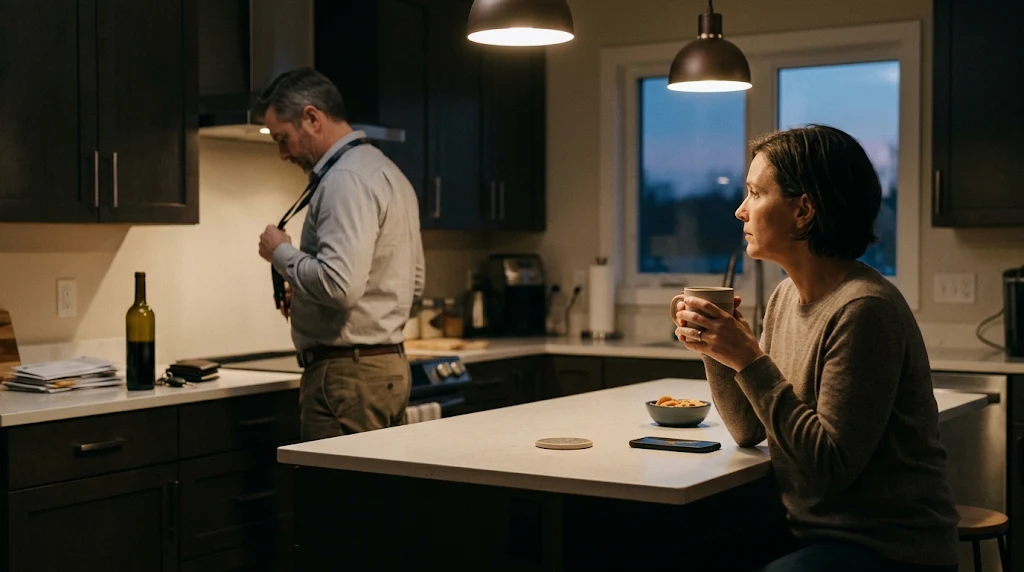
From the outside, nothing looks wrong. Your partner goes to work, pays the bills, coaches the kids’ team and is the first one people call when something needs fixing. Coworkers would describe them as reliable. Friends would describe them as fun. And yet you are the one who counts the empty bottles in the recycling, who notices the second bottle of wine opened “for cooking,” and who quietly takes over the evening once the drinking starts.
That gap between the public picture and the private one is the defining feature of what people call high-functioning alcoholism. Because the drinker keeps meeting their obligations, the problem often goes unnamed for years, and the partner is usually the first person to see it clearly.
This guide walks through the signs of high-functioning alcoholism from the point of view of the person who lives with it, explains how clinicians actually assess a drinking problem, and outlines treatment options that work for couples who cannot simply put their lives on pause. It is educational, not a diagnosis. Only a qualified professional can assess alcohol use disorder.
What “High-Functioning” Actually Means
“High-functioning alcoholic” is not a medical diagnosis. Clinicians use the term alcohol use disorder (AUD), which the National Institute on Alcohol Abuse and Alcoholism describes as a medical condition marked by an impaired ability to stop or control alcohol use despite negative consequences. NIAAA’s guide to understanding alcohol use disorder lists 11 criteria drawn from the DSM-5. Two to three criteria in the past year suggest mild AUD, four to five moderate, and six or more severe.
Notice what the criteria do not require: job loss, arrests or a ruined bank account. A person can meet several of them while still earning promotions. Research backs this up. A national analysis published in Drug and Alcohol Dependence identified a “functional” subtype that made up about 19.5% of people with alcohol dependence in the United States. People in this group tended to be middle-aged, working and in stable relationships, and roughly one-third had a multigenerational family history of alcoholism. About a quarter had experienced major depression at some point in their lives.
It is also worth knowing where the line sits. CDC researchers found that about 90% of adults who drink excessively do not meet the criteria for alcohol dependence. Heavy drinking and alcohol use disorder are not the same thing, but heavy drinking is the road that leads there, and it carries its own health risks either way.
How Much Is “Too Much”? A Reference Point for Couples
Many couples argue about drinking without a shared yardstick. NIAAA offers one. According to its definitions of moderate, binge and heavy drinking:
- Heavy drinking is five or more drinks on any day, or 15 or more per week, for men; and four or more drinks on any day, or eight or more per week, for women.
- Binge drinking is a pattern that brings blood alcohol concentration to 0.08% or higher, which typically happens after about five drinks for men or four for women within roughly two hours.
One “standard drink” is smaller than many people assume: 12 ounces of regular beer, 5 ounces of wine or 1.5 ounces of distilled spirits. A generous home pour of wine can easily be two drinks. If your partner’s “couple of glasses” every night is really four or five standard drinks, the pattern may already fall in the heavy range, regardless of how well they seem to handle it.
Signs of High-Functioning Alcoholism Partners Often Notice First
The list below is educational, not a diagnostic checklist. One sign on its own means little. A pattern of several, especially when they are getting stronger over months, is a reason to talk with a professional.
1. Drinking has a schedule, and the schedule is protected
The drink after work is not occasional; it is a fixed appointment. Plans that interfere with it are quietly declined, rearranged or met with irritation. Many partners describe the evening as “belonging” to the drinking.
2. Tolerance that looks like a talent
Your partner can drink more than anyone at the table and still seem fine. Friends may admire it. Clinically, needing more alcohol to feel the same effect is one of the AUD criteria, not a sign of strength.
3. The rules keep changing
“Only on weekends” becomes “only after 5 p.m.,” which becomes “only beer.” Repeated attempts to set limits, followed by quietly breaking them, are one of the most telling signs, because they show the person already senses a problem.
4. Hidden or disguised drinking
Bottles in the garage or the car. Pre-drinking before a party. A water bottle or coffee mug that is not what it seems. Receipts from a second store. Secrecy around alcohol is one of the clearest signals that drinking has moved beyond casual use.
5. Mornings that tell a different story
The workday may go fine, but mornings at home do not: shakiness, sweating, nausea, irritability or anxiety that eases after a drink. These can be early withdrawal symptoms, and they matter medically. CouplesRehab.com explains why alcohol withdrawal can be dangerous and why stopping suddenly after long-term daily drinking should be done with medical guidance.
6. Memory gaps about the evening
Asking the same question twice, forgetting conversations or not remembering how a disagreement started are common in relationships with heavy evening drinking. Blackouts are a sign that drinking is reaching levels that affect the brain’s ability to form memories.
7. Success used as a defense
“I’ve never missed a day of work.” “Do you see the house we live in?” When accomplishments are offered as proof that drinking is not a problem, the conversation has shifted from the drinking to the drinker’s identity. This is one of the most frustrating patterns partners describe.
8. The partner has become the safety net
You drive home from every event. You handle bedtime alone. You cover with family when plans fall through, and you keep the calendar so nothing slips. In many couples, the “functioning” in high-functioning alcoholism is partly being done by the partner. That is not a failure on your part; it is a common, understandable adaptation. But it also hides the true cost of the drinking, sometimes even from the drinker.
9. Emotional distance at home
The person who is warm and engaged at work may be absent, short-tempered or numb at home once the drinking starts. Conversations about anything difficult get postponed to “tomorrow,” and tomorrow rarely comes. Many partners say they miss the person they married even though that person comes home every night.
10. Risky moments that are explained away
Driving after “just a few,” drinking while supervising children, or mixing alcohol with sleep aids or anti-anxiety medications. These are safety issues, not just relationship issues, and they deserve to be named directly.
If several of these sound familiar, you may also find it helpful to read this CouplesRehab.com guide for partners who are thinking, “my husband drinks every night”, which explores when routine drinking becomes something more.
Noticing these signs at home?
You don’t have to sort this out alone
CouplesRehab.com offers a free, confidential couples assessment that helps partners understand what they’re seeing and which level of care may fit, from outpatient support to medical detox.
Take the Couples AssessmentWhat Coworkers See vs. What Partners See
| Area of life | What the outside world sees | What a partner often sees |
|---|---|---|
| Work | Meets deadlines, well regarded | Calls in “working from home” after heavy nights; drinks immediately after work |
| Social life | Life of the party, “can hold their liquor” | Pre-drinks, drives home only if you insist, needs a drink to relax around people |
| Finances | Stable income, nice home | Alcohol spending that is hidden or rising, purchases at more than one store |
| Health | Seems fine | Poor sleep, morning shakiness, heartburn, weight changes, rising blood pressure |
| Relationship | “Great couple” | Arguments that are forgotten, intimacy that fades, one partner carrying the household |
Why High-Functioning Drinking Is So Hard to Confront
Several forces keep high-functioning alcoholism in place. The drinker’s competence makes the problem easy to deny. Friends and family may minimize your concerns because they only see the public version. Social drinking norms, especially in high-pressure careers, make heavy drinking look ordinary. And partners often worry, reasonably, that raising the issue will cause a fight, threaten the family’s income or be dismissed entirely.
It can help to shift the conversation from labels to specifics. “You’re an alcoholic” invites an argument about a word. “Last Thursday you didn’t remember our conversation about the kids, and it scared me” is harder to dismiss. A clear, calm description of what you have seen, paired with a request to talk to a doctor or counselor, is often more effective than an ultimatum. CouplesRehab.com has a practical guide on setting boundaries with an addicted partner that can help you decide what you will and will not keep carrying.
What Treatment Looks Like for a High-Functioning Drinker
One of the biggest myths about high-functioning alcoholism is that treatment means disappearing from work for months. In reality, there is a full range of care, and the right level depends on how much and how long someone has been drinking, their physical and mental health, and their home situation. NIAAA’s guide to treatment for alcohol problems describes the main options, and its free Alcohol Treatment Navigator helps families find and compare quality providers.
Medical evaluation and detox. Anyone who drinks heavily every day should be evaluated before stopping. Alcohol withdrawal can range from shakiness and anxiety to seizures and delirium tremens, which is why medically supervised alcohol detox programs exist. This step usually takes days, not months.
Medications. The FDA has approved three medications for alcohol use disorder: naltrexone, acamprosate and disulfiram. They are non-addictive and can reduce cravings or support abstinence alongside counseling. They are underused, and many people with AUD never hear about them.
Outpatient and intensive outpatient care. For many working professionals, outpatient alcohol programs or intensive outpatient programs (IOPs) offer several hours of therapy a week, often in the evening, while the person keeps working and living at home.
Residential treatment. When drinking is severe, when there are co-occurring mental health conditions, or when home is not a safe place to stay sober, a residential program offers more structure and distance from daily triggers.
Couples-based care. Because alcohol use disorder changes the whole relationship, many couples benefit from treatment that includes both partners. A NIDA-supported review of behavioral couples therapy found that adding couples sessions to individual treatment was associated with reduced drinking and improved relationship satisfaction compared with individual counseling alone. CouplesRehab.com outlines how alcohol rehab programs for couples work, including what happens when only one partner is drinking.
Treatment that fits work and family life
Many couples are surprised by what their insurance covers. The CouplesRehab.com team can help verify benefits and explain outpatient, intensive outpatient and residential options for one or both partners.
Check Insurance Coverage Compare Levels of CareIf Your Partner Says There’s No Problem
Denial is common, especially when a person’s career is going well. You cannot force someone to change, but you can change what you do. Many partners start by getting support for themselves through a therapist, a family program or a peer group. Approaches such as CRAFT (Community Reinforcement and Family Training) teach family members practical communication skills that have been shown to increase the chances a loved one enters treatment. For step-by-step ideas, read CouplesRehab.com’s guide on how to convince your partner to go to rehab.
Two safety notes. If drinking is ever paired with threats, intimidation or violence, your safety comes first; call 911 in an emergency. And if you or your partner is having thoughts of suicide or self-harm, call or text the 988 Suicide & Crisis Lifeline at any time. For free, confidential treatment referrals around the clock, the SAMHSA National Helpline is available at 1-800-662-4357.
Frequently Asked Questions
What are the most common signs of high-functioning alcoholism?
Common signs include drinking on a fixed daily schedule, high tolerance, broken personal drinking rules, hidden drinking, morning shakiness or irritability, memory gaps, and using career success to deflect concerns. Partners often notice these at home long before anyone at work does.
Is high-functioning alcoholism a real diagnosis?
No. It is an informal term. Clinicians diagnose alcohol use disorder using 11 criteria from the DSM-5, rated mild, moderate or severe. Someone can meet the criteria for AUD while still working and appearing successful.
Can a high-functioning alcoholic stop drinking on their own?
Some people reduce or stop drinking without formal treatment, but anyone who drinks heavily every day should talk to a doctor before quitting because alcohol withdrawal can be dangerous. Counseling, medications and peer support make long-term change more likely.
Can someone keep working while getting treatment for alcohol use disorder?
Often, yes. Outpatient and intensive outpatient programs are designed around work schedules, and medications for AUD can be prescribed by a primary care doctor. Medical detox, when needed, usually takes several days.
How do I talk to my spouse about their drinking?
Choose a calm, sober moment. Describe specific events and how they affected you, avoid labels, and suggest a concrete next step such as seeing a doctor together. Getting support for yourself first can make the conversation easier.
Does couples therapy help with alcohol problems?
Research on behavioral couples therapy suggests that adding couples sessions to individual treatment can reduce drinking and improve relationship satisfaction. It works best alongside each partner’s individual care.
Support for Both Partners
High-functioning alcoholism hides well, but it rarely stays contained. Its weight usually lands on the relationship first, and the partner who sees it is not overreacting. Naming the pattern is not an attack on the person you love; it is the first step toward getting both of you real support.
CouplesRehab.com helps couples understand their options for alcohol and drug treatment, from medical detox and outpatient programs to couples therapy and aftercare. Couples who are noticing these signs at home can reach out to the CouplesRehab.com team to talk through levels of care, insurance verification and next steps that fit work and family life.