Carfentanil and New Fentanyl Variants: A Partner’s Guide to Overdose Risk
If someone may be overdosing right now: call 911 and give naloxone (Narcan) if you have it. Signs include not waking up, slow or stopped breathing, gurgling or snoring sounds, and blue or gray lips or fingernails. If you aren’t sure, the CDC says to treat it as an overdose. Most states have Good Samaritan laws that protect people who call for help.
On September 15, the White House Office of National Drug Control Policy issued a Drug Threat Notice about three fentanyl analogues showing up in the illegal drug supply: carfentanil, fluorofentanyl, and methylfentanyl. According to CDC estimates cited in the notice, the three have been involved in at least 12,500 deaths since 2023. All three are at least as potent as fentanyl, and the notice describes carfentanil as up to 100 times more potent.
Notices like this are written for doctors, first responders, and law enforcement. This article is for the people who live with the risk every day: husbands, wives, and partners of someone who uses opioids or pills that didn’t come from a pharmacy. It covers what these substances are, why counterfeit pills are the biggest danger, what to keep at home, and why the time after detox or a stretch of sobriety can be the riskiest of all.
What carfentanil and fentanyl analogues are
Fentanyl analogues are drugs chemically similar to fentanyl, made by altering its structure slightly. Carfentanil was developed as a tranquilizer for very large animals like elephants and is not approved for use in people. Fluorofentanyl and methylfentanyl are other variants that have appeared in the illegal supply.
The key point for families is that nobody using street drugs or pills can tell which of these they’re getting. They aren’t sold by name. They show up mixed into heroin, sold as fentanyl, or pressed into pills that look like real prescriptions. Someone whose body has adjusted to one supply can suddenly be exposed to something much stronger without knowing it.
Why counterfeit pills are the biggest risk
Many people who overdose on fentanyl never meant to take it. They thought they were taking oxycodone, Xanax, or Adderall. The DEA warns that illicit fentanyl is increasingly pressed into pills made to look like legitimate prescription medications. In DEA laboratory testing, 42% of pills tested for fentanyl contained at least 2 milligrams, an amount the agency considers potentially lethal depending on a person’s size, tolerance, and past use. In 2025 alone, the DEA reported seizing more than 47 million fentanyl-laced fake pills.
This matters for partners because pill use can look less alarming than heroin or powder fentanyl. A spouse who started with a legitimate pain prescription and now buys “the same pills” from a friend or online may not think of themselves as at risk, and neither may the people around them. The DEA’s guidance is blunt: the only safe medications are ones prescribed by a trusted medical professional and dispensed by a licensed pharmacist. Any pill from another source should be treated as possibly containing fentanyl or a stronger analogue.
If your partner’s use began with a prescription after an injury or surgery, our guide to a spouse who is relying on pain pills covers the warning signs and how to raise it.
Keep naloxone at home, and know it may take more than one dose
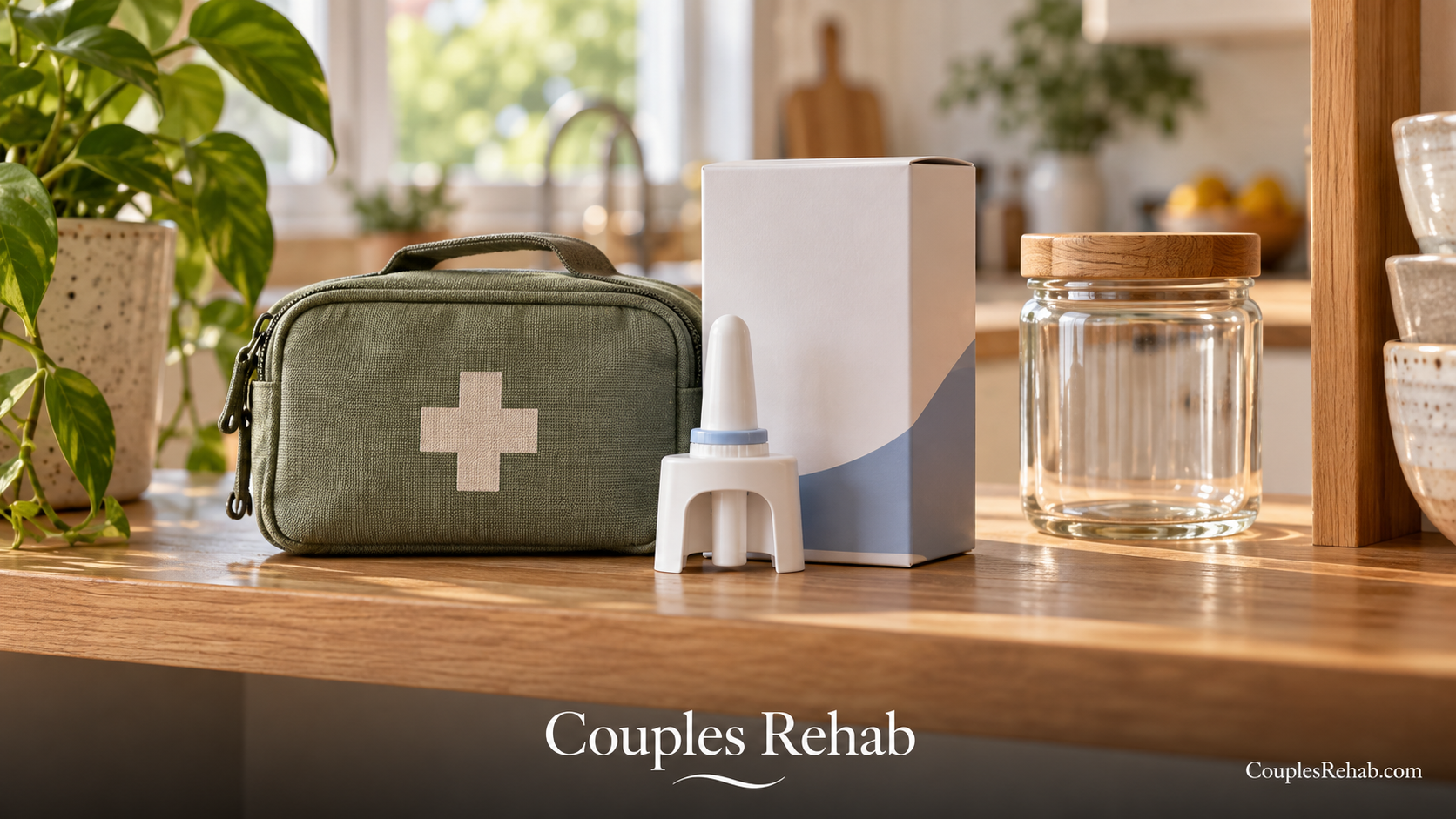
Naloxone (often sold as Narcan) is a medication that can reverse an opioid overdose, including from fentanyl. According to the CDC, it comes as a prefilled nasal spray or an injection, it can restore normal breathing within 2 to 3 minutes, and you don’t need a prescription. It’s available over the counter in all 50 states at most pharmacies, and many health departments and community programs give it out free.
The CDC also notes that more than one dose of naloxone may be required when stronger opioids like fentanyl are involved. With analogues as potent as carfentanil, that’s an important detail. A few practical steps for households:
- Keep at least two doses at home, in a place everyone knows about and can reach quickly.
- Keep a dose in the car or a bag if your partner is often away from home.
- Read the package instructions now, not during an emergency. Many pharmacies and health departments offer short training, and the CDC has instructional videos.
- Make sure other adults in the home, and anyone your partner spends time with, know where it is.
- Check the expiration date and replace used or expired doses.
Having naloxone at home doesn’t mean you’re accepting or encouraging drug use. It means you are prepared for an emergency, the same way a family with a severe allergy keeps an epinephrine injector around.
Signs of an opioid overdose
According to the CDC, signs of an opioid overdose include:
- Being unconscious or unable to wake up
- Slow or shallow breathing, or difficulty breathing, such as choking sounds or a gurgling or snoring noise from someone who can’t be woken
- Discolored skin, especially blue or gray lips or fingernails
- Small, pinpoint pupils that don’t react to light
Snoring is worth calling out. Families sometimes assume a partner is sleeping deeply when the sound is actually a sign their breathing is failing. If someone who has been using can’t be woken, don’t let them “sleep it off.”
What to do
The CDC’s steps for responding to a suspected overdose:
- Give naloxone if you have it, and call 911.
- Try to keep the person awake and breathing.
- Lay them on their side to prevent choking.
- Stay with them until emergency help arrives.
If the first dose of naloxone doesn’t work, follow the package instructions for giving another dose. Even if the person wakes up, they still need emergency medical care, because naloxone wears off and the person may stop breathing again. The CDC also notes that most states have Good Samaritan laws protecting people who are overdosing and those who call for help from certain criminal penalties. Fear of police should not stop anyone from calling 911.
Why the risk rises after detox or time sober
This is the part many families don’t hear until it’s too late. After detox, a treatment stay, jail, a hospital stay, or even a few weeks of not using, a person’s tolerance drops. If they go back to using the amount they used before, their body can no longer handle it. Research summarized by the Recovery Research Institute notes that returning to previous amounts after detox can result in overdose because of this loss of tolerance.
Add a supply that may contain carfentanil or another strong analogue, and a relapse after a period of sobriety becomes especially dangerous. For partners, that means a few things:
- The weeks after someone leaves detox or treatment are a time to have naloxone at home, not a time to put it away.
- Know the signs that a partner may be using again, such as changes in sleep, mood, money, or secrecy.
- If a relapse happens, focus on safety first. Our guide to what to do after a spouse relapses covers the next steps.
Medication matters here, too. The same research found that people who received medication for opioid use disorder (buprenorphine or methadone) after detox had substantially lower death rates over the following year than people who received no treatment. Detox alone is not treatment, and it’s worth asking any provider what ongoing care, including medication, looks like after discharge.
Talking with your partner about it
Many partners avoid this conversation because it feels like it will either start a fight or sound like permission. It doesn’t have to be either. Some approaches that tend to land better:
- Lead with safety, not judgment. “I read about these new fentanyl variants, and I’m scared. I want us to have naloxone in the house” is about protecting them, not accusing them.
- Share the facts about pills. Many people genuinely don’t know that pills from outside a pharmacy may be counterfeit.
- Make a plan together. Where the naloxone is, who knows about it, and what happens if one of you finds the other unresponsive.
- Keep the door to treatment open. “Whenever you’re ready, I’ll help you find somewhere” leaves room for a yes later.
Living with a partner’s opioid use is exhausting and frightening. Your own support matters, too, whether that’s a counselor, a family support group, or someone you trust. If you’re looking for more on how to approach a resistant partner, see how to talk to a partner about treatment.
Treatment options for opioid use
Effective treatment for opioid use disorder exists, and it often starts with medication:
- Medically supervised detox to manage withdrawal safely. Our guide to fentanyl withdrawal explains what to expect.
- Medication for opioid use disorder, such as buprenorphine or methadone, which research links to lower overdose death rates.
- Outpatient, intensive outpatient, or residential care, depending on what a licensed clinician recommends.
- Dual diagnosis care when depression, anxiety, trauma, or chronic pain are part of the picture. See dual diagnosis programs.
- Couples-based care when both partners want it and it’s safe. Fentanyl addiction treatment for couples explains how that works.
The levels of care guide explains how these options differ.
Frequently asked questions
What is carfentanil?
Carfentanil is a fentanyl analogue originally developed as a tranquilizer for very large animals and not approved for use in people. A September 2026 White House Drug Threat Notice describes it as up to 100 times more potent than fentanyl and lists it, along with fluorofentanyl and methylfentanyl, as appearing in the illegal drug supply.
Does naloxone work on carfentanil and other fentanyl analogues?
Naloxone reverses opioid overdoses, including from fentanyl. The CDC notes that more than one dose may be required when stronger opioids like fentanyl are involved, so households should keep at least two doses on hand, follow the package instructions, and always call 911.
Do I need a prescription for naloxone?
No. According to the CDC, naloxone is available over the counter in all 50 states, and many health departments and community programs provide it for free.
What are the signs of an opioid overdose?
The CDC lists being unconscious or unable to wake up, slow or shallow breathing or gurgling and snoring sounds, blue or gray lips or fingernails, and pinpoint pupils. If you are not sure, treat it as an overdose: give naloxone if you have it and call 911.
Why is overdose risk higher after detox or rehab?
After detox, treatment, jail, or any period without using, tolerance drops. Returning to the amount used before can cause an overdose, and a supply containing stronger analogues raises the risk further. Medication for opioid use disorder after detox is linked to lower death rates.
How can I tell if a pill is counterfeit?
You usually cannot. Counterfeit pills are made to look like real prescription medications such as oxycodone, Xanax, or Adderall. The DEA says the only safe medications are ones prescribed by a medical professional and dispensed by a licensed pharmacist.
Getting help
If you’re ready to explore treatment for your partner, yourself, or both of you, the Couples Assessment walks through clinical and relational needs and matches couples to verified, independent licensed providers, through telehealth or in person. You can also reach a Care Navigator at 888-500-2110, Monday through Friday, 9am to 6pm Pacific. Care Navigators are not clinicians and do not provide medical advice, diagnosis, or treatment.
Outside those hours, SAMHSA’s National Helpline is free, confidential, and available 24/7 at 1-800-662-4357. In an overdose emergency, call 911. If you or someone you love is in emotional crisis, call or text the 988 Suicide & Crisis Lifeline. More resources are on our crisis support page.
References
- The White House, Office of National Drug Control Policy. White House Releases Drug Threat Notice on Deadly Fentanyl Analogues. September 15, 2026.
- Centers for Disease Control and Prevention. Lifesaving Naloxone.
- Centers for Disease Control and Prevention. Responding to an Overdose.
- Drug Enforcement Administration. Facts About Fentanyl.
- Drug Enforcement Administration. One Pill Can Kill.
- Walley, A. Y., et al. (2020). Association between mortality rates and medication and residential treatment after in-patient medically managed opioid withdrawal. Addiction, 115(8), 1496–1508. Summarized by the Recovery Research Institute.
- Substance Abuse and Mental Health Services Administration. National Helpline.
Couples Rehab is an independent educational and referral resource. We do not provide medical or clinical care directly and are not a treatment provider. All care described here is delivered by independent licensed providers. This article is for informational purposes and is not a substitute for medical advice, diagnosis, or treatment from a qualified professional. In an emergency, call 911. Our sourcing and review process is described in our editorial standards