How to Know When Someone Needs Rehab: A Guide for Partners
Most people who search for how to know when someone needs rehab are not asking about a stranger. They are asking about the person who sleeps next to them, who used to call on the drive home, who now comes in late and says nothing is wrong. You have watched the pattern up close for months. What you need is a way to read it clearly, and a sense of what to do next.
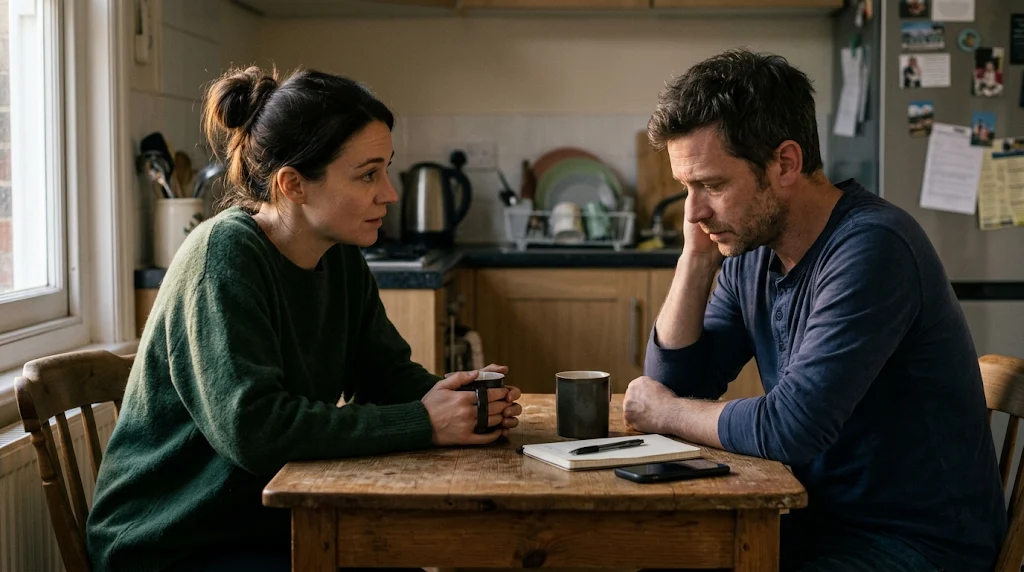
This guide is written for that seat at the kitchen table. It explains how clinicians actually decide that someone needs treatment, which changes partners tend to notice first, how to tell a stressful season from a substance use disorder, and how to match what you see to the right level of care.
Why the question is so hard to answer from inside a relationship
Addiction rarely arrives as one dramatic event. It shows up as a slow drift: one more drink becomes a nightly routine, a prescription runs out early, weekends start to revolve around using. Because the change is gradual, partners often adjust to it before they name it. You cover a missed dinner, you stop inviting friends over, you take on more of the bills. Those adjustments are acts of love, but they can also blur your view of how far things have moved.
There is a second reason the question feels murky. The person using often has a ready explanation for each incident, and each explanation sounds plausible on its own. The signal is not in any single night. It is in the pattern across weeks and months, and in what happens when your partner tries to cut back.
What “needing rehab” means in clinical terms
Clinicians do not decide someone needs rehab based on how much they drink or use alone. They look for a substance use disorder, which is defined by loss of control and continued use despite harm. The National Institute on Alcohol Abuse and Alcoholism describes 11 criteria drawn from the DSM-5, assessed over the past year. Meeting two to three suggests a mild disorder, four to five a moderate one, and six or more a severe one.
Those criteria fall into four broad groups that a partner can often observe:
- Impaired control. Using more or for longer than intended, repeated failed attempts to cut down, and a lot of time spent getting, using or recovering.
- Social and role problems. Missing work or family obligations, giving up activities they once valued, and continuing to use even when it causes conflict at home.
- Risky use. Driving after drinking, mixing substances, or using in situations that are physically dangerous.
- Physical dependence. Needing more to feel the same effect (tolerance) and feeling sick, shaky, anxious or unable to sleep when they stop (withdrawal).
A diagnosis is not something a partner can or should make. What you can do is notice which of these groups you are seeing, write down specific examples, and bring that picture to a professional assessment. Treatment is also not reserved for the severe end. The National Institute on Drug Abuse notes that treatment does not need to be voluntary to be effective. Earlier care also tends to mean fewer losses to recover from.
Signs your partner may need rehab: what partners notice first
People outside the home see the polished version. Partners see the rest. These are educational examples of changes that often prompt couples to seek an evaluation, not a checklist that confirms or rules out a disorder.
- The story keeps changing. Small lies about where they were, how much they had or where money went, followed by anger when you ask.
- Money moves in ways you cannot explain. Cash withdrawals, missing valuables, new credit cards, or bills that were always paid now arriving late.
- The relationship has a new rhythm built around using. Plans get cancelled, intimacy fades, and evenings follow a script you can predict.
- Promises to cut back do not hold. They sincerely mean it on Monday and are back to the old pattern by Friday. This repeated cycle is one of the clearest markers of lost control.
- Mood swings track the substance. Irritable or flat when not using, relieved or animated once they are.
- You are managing the fallout. Calling in sick for them, hiding things from the kids or family, or feeling like you live with a secret.
- Physical changes appear. Sleep problems, weight change, tremors in the morning, frequent illness or unexplained injuries.
If several of these feel familiar, the CouplesRehab.com guide to signs your relationship needs rehab looks at how these patterns affect both partners, not only the one who is using.
A rough patch or a pattern? Three questions that help
Grief, a job loss or a new baby can push anyone toward heavier drinking for a while. To separate a hard season from a disorder, it helps to ask three questions honestly.
1. Has it lasted, and is it growing? A few weeks of heavier use after a crisis that eases as life settles is different from a pattern that has run for months and keeps escalating.
2. What happens when they try to stop? If your partner can take a break for a few weeks without significant distress, that tells you something. If every attempt ends early, or if stopping brings shaking, sweating, racing heart, anxiety or insomnia, that suggests physical dependence and a need for medical guidance.
3. Is the cost rising while the use continues? The defining feature of addiction is continuing despite harm. If health, work, money or your relationship are clearly suffering and the use is unchanged, the question is less whether help is needed and more which kind.
When it is time to act today, not next month
Some situations need immediate medical attention rather than a waiting list.
- Withdrawal from alcohol, benzodiazepines or similar sedatives. Stopping suddenly after heavy daily use can cause seizures or delirium. Do not encourage your partner to quit cold turkey on their own. Read more about why alcohol withdrawal can be dangerous and plan for medically supervised detox.
- Signs of overdose. Slow or stopped breathing, blue lips, or being unresponsive. Call 911. If opioids could be involved, give naloxone if you have it.
- Talk of suicide or self-harm. Call or text the 988 Suicide & Crisis Lifeline any time, or call 911 if there is immediate danger.
- Violence or threats at home. Your safety and your children’s safety come first. A treatment conversation can wait until everyone is safe.
Matching what you see to the right level of care
“Rehab” is a family of services, not a single place. The right fit depends on medical risk, how much daily structure is needed, the home environment and whether a mental health condition is part of the picture. The CouplesRehab.com overview of addiction treatment levels walks through each one in more depth.
| What you are seeing | Level of care often considered |
|---|---|
| Physical dependence, risk of withdrawal | Medically supervised detox, then ongoing treatment |
| Severe use, unsafe home, repeated relapse | Residential (inpatient) rehab |
| Needs daily structure but stable housing | Partial hospitalization (PHP) |
| Moderate use, can keep working with support | Intensive outpatient (IOP) |
| Mild use, early concerns, strong motivation | Standard outpatient therapy |
This table is a starting point for a conversation with a licensed clinician, who will use a full assessment to recommend a level of care.
For couples, one more variable matters: whether one or both partners are using. When both are, separate treatment can leave each person returning to a home where the old pattern is waiting. Programs that treat partners together, and that include structured approaches such as behavioral couples therapy, have research behind them. A meta-analysis in Clinical Psychology Review found that behavioral couples therapy produced better outcomes on substance use and relationship satisfaction than individual-based treatment alone. Couples who are unsure where they fit can start with a confidential couples assessment.
How to raise it without starting a war
Once you are fairly sure your partner needs help, the conversation itself becomes the next hurdle. A few principles tend to help.
Choose a sober, calm moment, not the middle of an argument or the morning after a bad night. Speak about specific events and how they affected you (“When you missed Maya’s recital, I felt alone”) rather than labels like “addict.” Offer a concrete next step, such as a single assessment appointment, rather than demanding a 30-day stay. Expect resistance and plan to come back to the subject rather than forcing a decision on the spot.
Families do not have to choose between confrontation and silence. Community Reinforcement and Family Training (CRAFT) teaches loved ones to reward sober behavior, step back from rescuing, and time their requests well. In a 2017 controlled trial, about 62 percent of loved ones trained in CRAFT-based approaches helped the person they cared about enter treatment, compared with 37 percent in a twelve-step facilitation group. If your partner says no, our guide on what to do when a loved one refuses rehab covers next steps in detail.
Taking care of yourself while you decide
Living with someone’s addiction is exhausting, and partners often carry anxiety, depression or shame of their own. Your own support is not a distraction from helping your partner. It is part of it. Individual counseling, Al-Anon or Nar-Anon, or a family program can help you hold boundaries and stay steady.
The SAMHSA National Helpline at 1-800-662-4357 is free, confidential and available around the clock for referrals, and FindTreatment.gov lets you search licensed programs by location and payment type. Recovery is often not a straight line, and NIDA reports relapse rates for substance use disorders similar to those for other chronic illnesses. A setback is a reason to adjust the plan, not proof that treatment cannot help.
Moving forward together
Knowing when someone needs rehab comes down to patterns rather than single incidents: lost control, continued use despite harm, and physical dependence. Partners are often the first to see those patterns clearly. Writing down what you have observed, getting a professional assessment and choosing a level of care that fits are practical steps you can take this week.
CouplesRehab.com helps couples understand their options for addiction and mental health treatment, including programs where partners can heal side by side. Its care navigators can walk through assessment, insurance verification and levels of care at a pace that feels manageable for both of you.
Frequently asked questions
How do I know if my spouse needs rehab or just needs to cut back?
Look at what happens when they try. If your spouse can reduce or stop for several weeks without strong cravings or withdrawal, a lower level of support may be enough. If attempts keep failing, if withdrawal symptoms appear, or if use continues despite clear harm to health, work or the relationship, a professional assessment for treatment is the right next step.
Can I force my partner to go to rehab?
In most cases adults cannot be forced into treatment, though some states allow involuntary commitment under narrow conditions involving danger to self or others, and courts sometimes order treatment. Family approaches like CRAFT, clear boundaries and an offer of a single assessment are usually more effective than ultimatums.
What if we both need rehab?
When both partners are using, it can help to look for programs that treat couples together or coordinate care closely. Treating both people at once reduces the chance that one partner returns home to an environment where the other is still using.
Is it dangerous to stop drinking suddenly?
It can be. After heavy, daily drinking, stopping abruptly can cause withdrawal that ranges from tremors and anxiety to seizures and delirium tremens. Anyone with physical dependence on alcohol or sedatives should talk to a medical provider about supervised detox before quitting.
Does insurance cover rehab?
Many health plans cover substance use treatment, and federal parity law generally requires coverage comparable to medical care. Benefits vary by plan and level of care, so it is worth verifying coverage before admission.
What should I do if my partner talks about suicide?
Take it seriously. Call or text 988 to reach the 988 Suicide & Crisis Lifeline, which is available 24/7, or call 911 if there is immediate danger. Stay with your partner and remove access to weapons or large supplies of medication if you can do so safely.