Learning Center
Evidence-aware, relationship-focused education on mental health, addiction, and care options.
Educational only—not medical advice.
START HERE
Essential Guides
Treatment Levels Explained
Understand the continuum of care from outpatient therapy to inpatient treatment and how levels are determined
Read the guide →
Insurance & Coverage Guide
Learn how insurance coverage typically applies to mental health, addiction, and relationship-focused care.
Read the guide →
Mental Health FAQs
Clear, educational answers to common questions about therapy, treatment, and care options
Read the guide →
EXPLORE BY TOPIC
Care Path Topics
Telehealth
Remote mental health and recovery care through secure, HIPAA-compliant platforms.
Explore →
Mental Health IOP
Structured outpatient programs for individuals needing more support than weekly therapy.
Explore →
Trauma Therapy
Mental health support focused on addressing the effects of trauma safely and clinically.
Explore →
Dual Diagnosis Programs
Integrated treatment for co-occurring mental health and substance-related conditions.
Explore →
Online Couples Therapy
Virtual relationship-focused therapy for couples navigating communication and trust challenges.
Explore →
Couples Addiction Treatment
Coordinated recovery care that considers relationship dynamics and individual clinical needs.
Explore →
EDITOR’S PICK
Featured Guides
-
How to Turn Your Recovery Journey into a Career in Counseling
There is a specific kind of wisdom that you only get the hard way. When you have fought your way back from a dark place, whether that was addiction, deep grief, or a battle with your own mental health, you walk away with something textbooks simply cannot teach. You know the fear. You know the…
-
How Couples Build Strength and Understanding Together
There is a distinct difference between a relationship that simply survives and one that actually deepens over time. People often assume that love is a passive state, something that just exists between two people like gravity. But anyone who has sat in a therapy room, or even just at a kitchen table during a difficult…
-
How Couples Can Navigate Anxiety and Depression During High-Stress Seasons — An Outpatient Treatment Guide in Orange County
Outpatient Treatment Guide in Orange County
-
Family & Couples Program Orange County Addiction – Couples Rehab
Couples Program Orange County Addiction
-
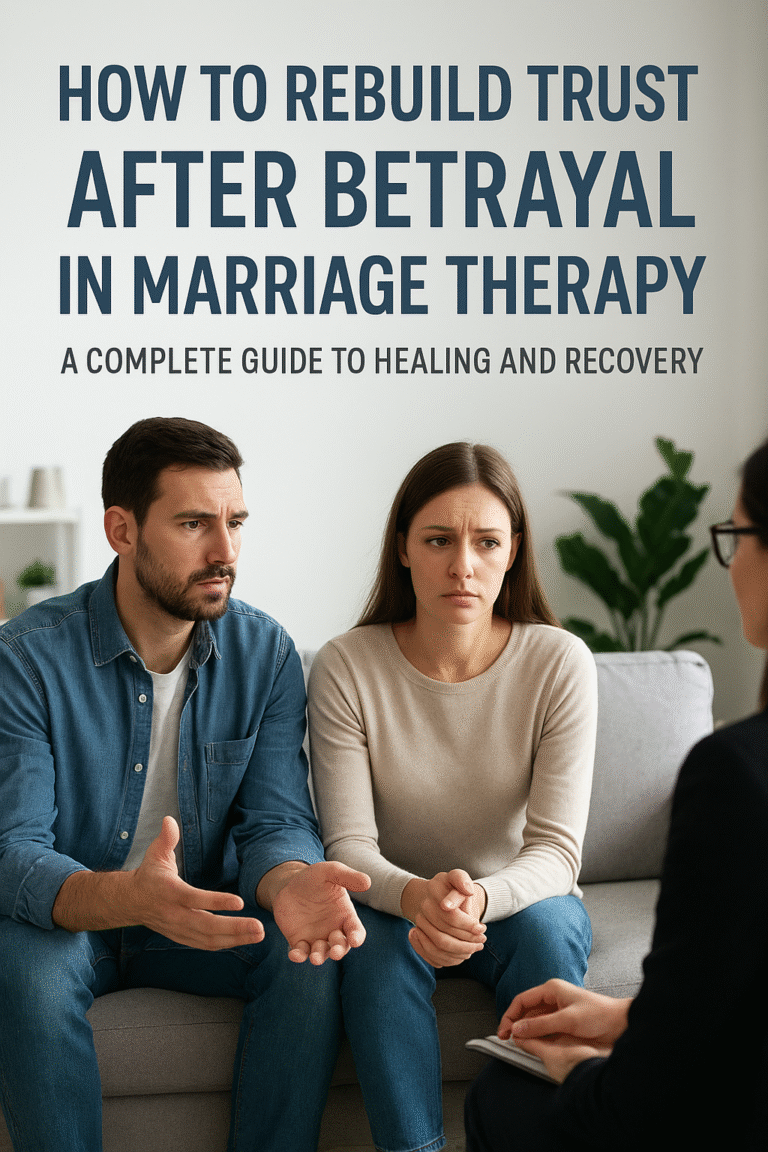
How to Rebuild Trust After Betrayal in Marriage Therapy: A Complete Guide to Healing and Recovery
How to Rebuild Trust After Betrayal in Marriage Therapy: A Complete Guide to Healing and Recovery The moment you discover your partner has betrayed you feels like the ground beneath your feet has crumbled away. Everything you believed about your relationship—your shared history, your future plans, the person you thought you knew—suddenly comes into question….
-
Is Couples Therapy Covered by Insurance?
Couples therapy can be life-changing for partners trying to rebuild trust, improve communication, or heal from the impact of addiction, trauma, or mental health issues. For many, the first question before entering treatment isn’t about the process itself; it is about affordability. Is couples therapy covered by insurance? For couples treatment centers, this is a…